In the early 1990s, General Motors attempted to redefine the American family hauler with a trio of minivans that became collectively known as the "Dustbusters": the Chevrolet Lumina APV, the Pontiac Trans Sport, and the Oldsmobile Silhouette. Built on GM's U-body platform and clad in composite plastic body panels rather than conventional stamped steel, the vans represented a deliberate break from the boxy, utilitarian silhouettes that Chrysler had popularized with its segment-defining minivans a decade earlier. The Dustbusters were wedge-shaped, aggressively raked, and unmistakably futuristic. They were also, in at least one measurable respect, hazardous to their own occupants.
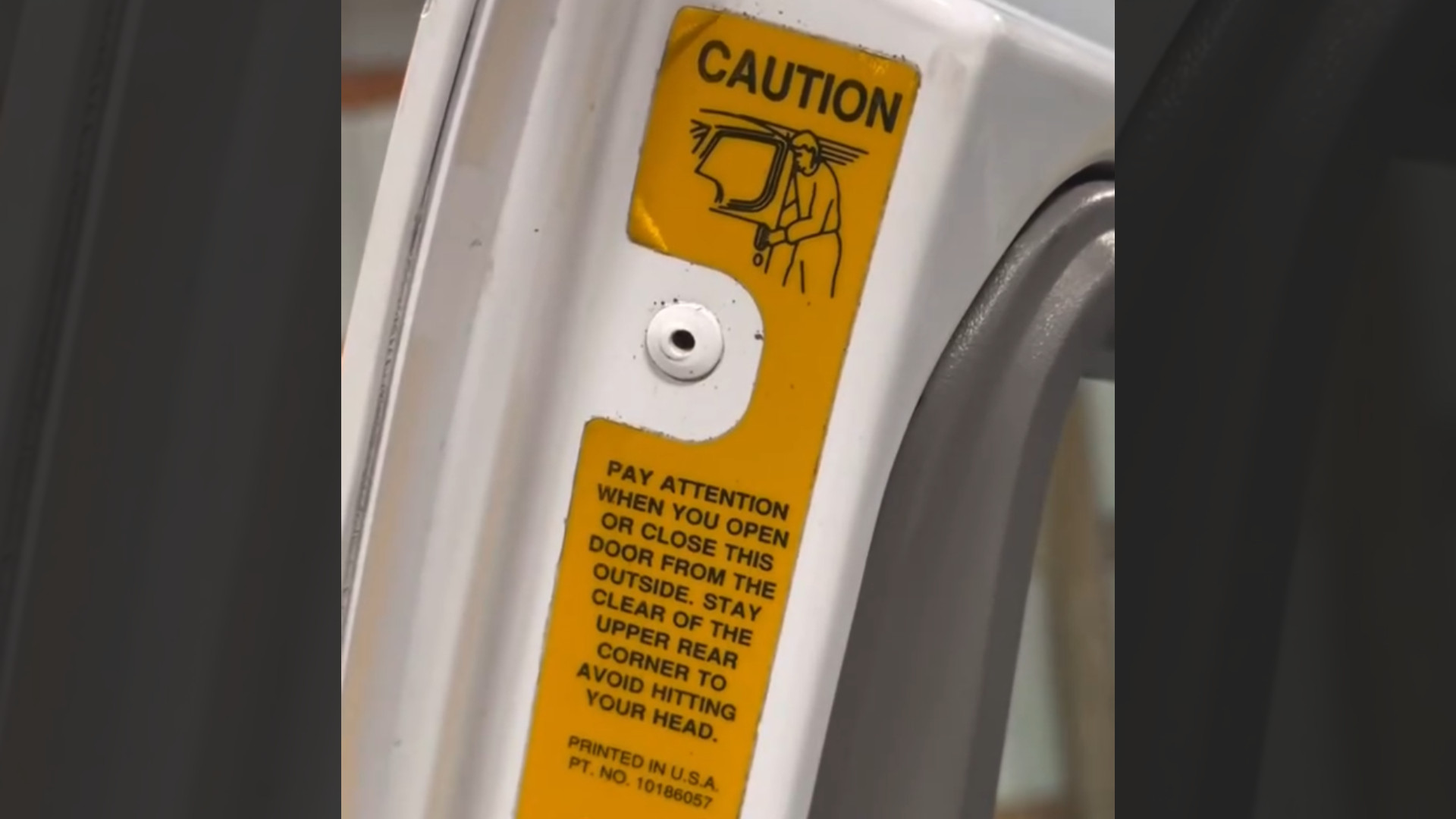
The problem was the front doors. To preserve the van's continuous, swept-back roofline, GM's designers extended each front door's trailing edge into a sharp, pointed "winglet" that jutted past the window frame. The geometry matched the vehicle's aggressive rake, but it also meant that when a person standing beside the van pulled the exterior handle, the pointed extension swung outward at roughly eye level. The act of opening the door could result in a blow to the face — a design consequence that turned a routine interaction into a minor physical risk.
When Aesthetics Override Ergonomics
The Dustbuster vans arrived during a period of intense experimentation in automotive design. The late 1980s and early 1990s saw several manufacturers chase aerodynamic, cab-forward proportions in pursuit of both fuel efficiency and visual differentiation. Chrysler's own LH-platform sedans, Pontiac's various "cladding-era" models, and a wave of concept-car-inspired production vehicles all reflected the same impulse: the belief that consumers would reward boldness over convention.
In that context, the Dustbusters' silhouette was not arbitrary. GM was responding to Chrysler's dominance in the minivan segment — a market the Dodge Caravan and Plymouth Voyager had essentially created in 1984 — by offering something that looked nothing like the competition. The composite body panels allowed shapes that would have been expensive or impractical to stamp in steel. The result was a vehicle that generated strong reactions at auto shows but proved polarizing in showrooms and, more critically, in driveways.
The door issue exemplified a broader tension in product design: the gap between what looks compelling on a styling buck and what works when a human being interacts with the object daily. Automotive ergonomics — the study of how drivers and passengers physically engage with a vehicle's controls, surfaces, and entry points — had been a recognized discipline for decades by the time the Dustbusters launched. The sharp trailing edge of the front door was not an obscure failure mode. It was a foreseeable consequence of the chosen geometry, one that apparently survived the design-approval process without sufficient intervention.
The Sticker as Engineering Compromise
GM's response to the problem was notable for its modesty. Rather than retooling the door stamping or adding a protective guard, the company applied small, transparent warning stickers to the window glass. The text cautioned users that the "door extension may cause injury," effectively transferring the burden of a design flaw onto the consumer's situational awareness. In regulatory terms, a warning label can satisfy a manufacturer's duty to inform. In practical terms, it asks the user to compensate for a hazard that the designer introduced.
The sticker solution was not unique to GM. The automotive industry has a long history of addressing design shortcomings through labels, owner's manual disclaimers, and technical service bulletins rather than physical redesigns — particularly when the affected component is expensive to retool mid-cycle. But the Dustbuster case stands out because the hazard was so elemental. The problem was not a complex mechanical failure or an unusual operating condition. It was the act of opening a door.
The Dustbuster generation was eventually replaced in the mid-1990s by more conventionally shaped successors that quietly abandoned the radical wedge profile. The market had delivered its verdict: Chrysler's minivans continued to outsell GM's offerings by wide margins throughout the period. Whether the door design contributed to consumer resistance or was merely a symptom of broader misjudgments in the program is difficult to isolate. What the episode does illustrate, with unusual clarity, is the cost of subordinating basic human interaction to visual ambition — and the inadequacy of a sticker as a substitute for sound ergonomic judgment.
With reporting from The Drive.
Source · The Drive