True symbolic language remains the singular achievement — or perhaps the singular burden — of the human species. While humans share the vast majority of their genetic blueprint with other primates, the cognitive leap required to assign abstract meaning to sound is a hurdle no other organism has demonstrably cleared. This evolutionary divergence defines the species, yet it remains one of the most elusive subjects in the history of science. The question of how Homo sapiens came to speak has occupied thinkers from Darwin onward, and the difficulty of answering it has, at various points, led serious institutions to abandon the inquiry altogether.
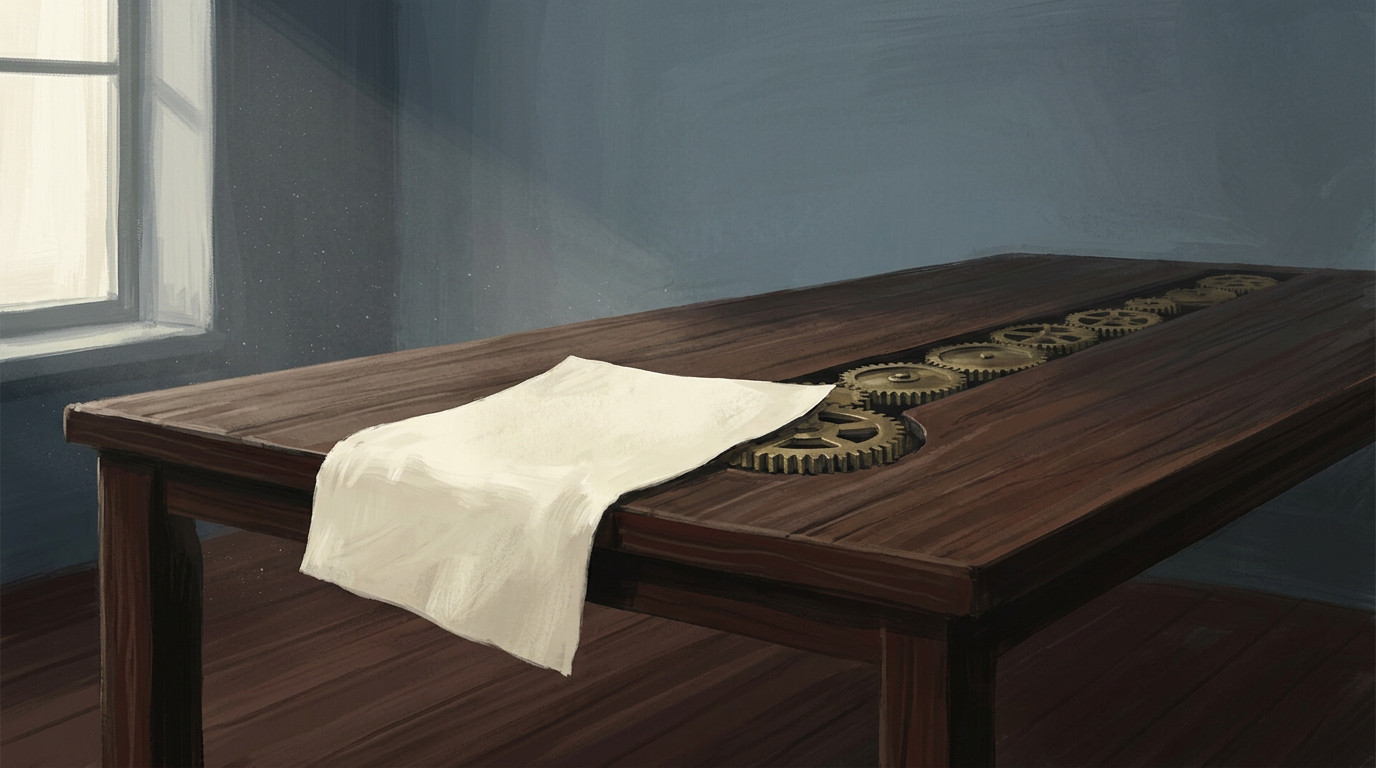
The primary challenge for linguists and evolutionary biologists is the nature of the medium itself. Unlike the femur of a hominid or the flint edge of an Acheulean hand axe, words do not fossilize. The transition from the primitive vocalizations of early ancestors to the complex, recursive syntax of modern humans occurred in a vacuum of physical evidence. Researchers are left to infer the development of the mind through the shadows it cast on the material world — a methodological constraint that sets the study of language origins apart from nearly every other branch of paleoanthropology.
The Silence in the Record
The absence of direct evidence has shaped the field's history as much as any discovery. In 1866, the Linguistic Society of Paris famously banned papers on the origin of language, deeming the topic too speculative for productive scholarship. The prohibition reflected a real epistemological problem: without recoverable data, theories about the birth of speech risked collapsing into unfalsifiable storytelling. For more than a century, the subject remained semi-taboo in mainstream linguistics.
The revival of serious inquiry came not from linguists but from adjacent disciplines — cognitive science, archaeology, genetics. The sequencing of the FOXP2 gene, associated with speech and language disorders in modern humans and found in a variant form in Neanderthal remains, offered one of the first molecular threads connecting biology to linguistic capacity. Yet a gene is not a sentence. FOXP2 contributes to the fine motor control of the mouth and larynx, but it says nothing about when or how the leap to symbolic reference occurred. The gap between biological precondition and cultural expression remains vast.
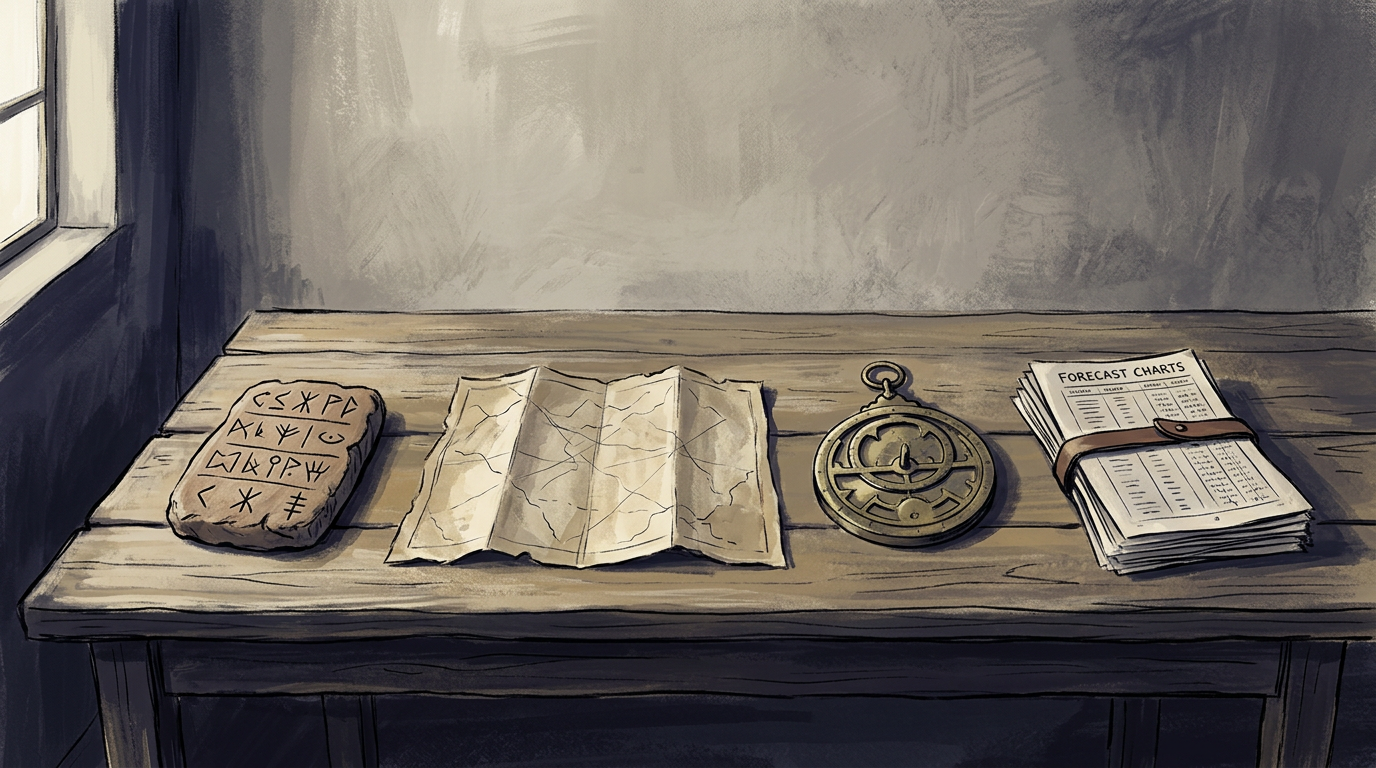
To find the missing links of language, researchers must look beyond the jawbone. They turn instead to the sudden appearance of symbolic art — the ochre engravings at Blombos Cave in South Africa, the figurative paintings of Chauvet in France — as well as ritual burials and complex tool-making sequences. These are treated as proxies for a mind capable of internal narrative, of holding an idea in abstraction and communicating it through shared convention. The logic is indirect but not unreasonable: an organism that can represent a bison on a cave wall is likely an organism that can represent a bison in speech.
Mapping Consciousness Through Artifacts
The proxy approach carries its own risks. Archaeological evidence is unevenly preserved and unevenly excavated. The concentration of early symbolic artifacts in certain regions may reflect the accidents of geology and funding rather than the actual geography of cognitive development. There is also the question of threshold: at what point does a shaped tool or a deliberate burial cross from sophisticated animal behavior into evidence of language? The boundary is contested, and the criteria for drawing it often reveal as much about the researcher's theoretical commitments as about the artifacts themselves.
What makes the problem enduringly compelling is its recursive quality. Language is the primary instrument humans use to study anything, including language itself. The attempt to reconstruct the origins of symbolic thought is conducted entirely within the medium whose origins are in question. This circularity does not invalidate the enterprise, but it imposes a kind of permanent modesty on its conclusions.
The fossil record of the human body grows richer with each decade. The fossil record of the human mind does not, and likely cannot, keep pace. Whether the gap will narrow through advances in genetics, neuroscience, or computational modeling — or whether the origin of speech will remain a question that science can frame but never fully resolve — is itself an open question. The artifacts sit in the dirt, silent as ever, and the architecture of the mind that made them remains a matter of inference.
With reporting from London Review of Books.
Source · London Review of Books