The Texture of Experience
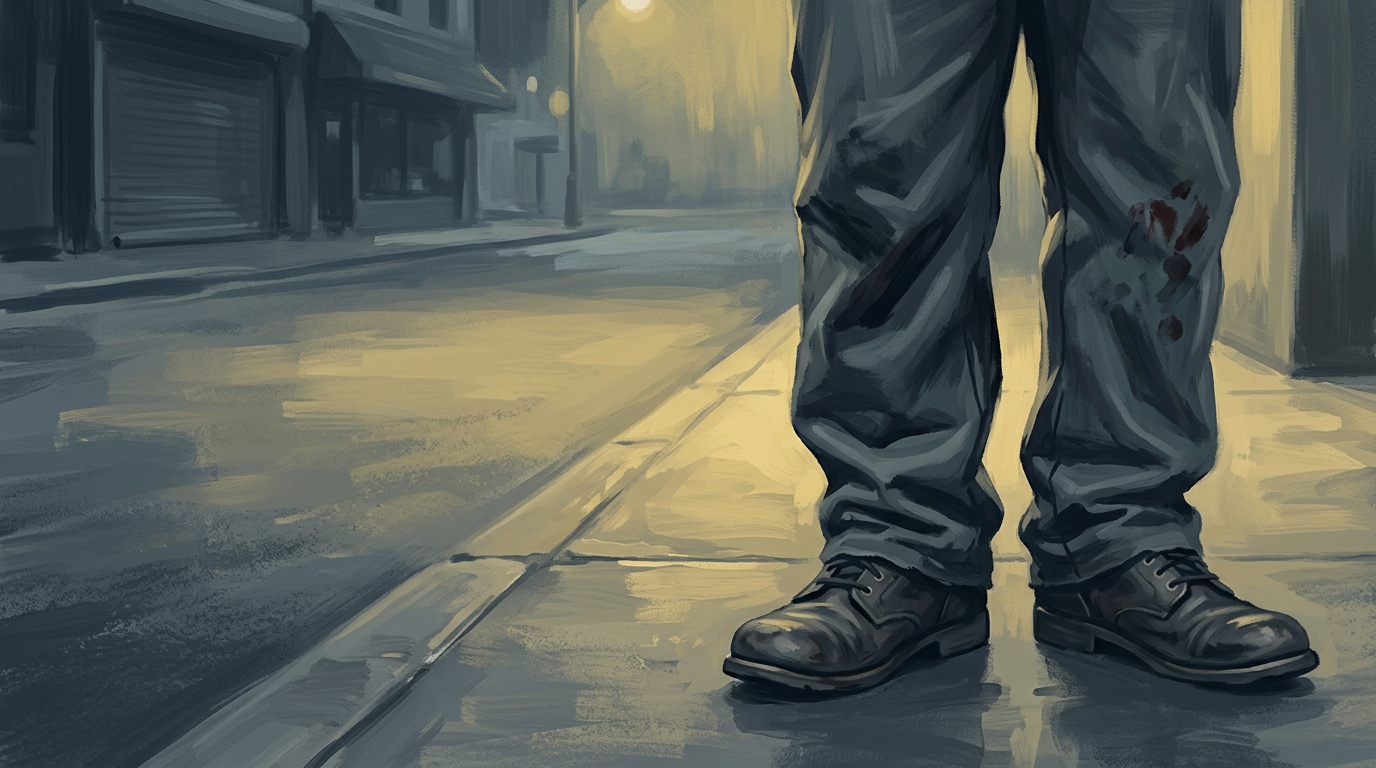
In a sudden, chaotic blur, writer Craig Fehrman found himself on the ground, fighting for his physical integrity. A dog attack — characterized by the grinding of teeth and the frantic swing of a recycling bin used as a makeshift weapon — left him standing under the flat light of streetlamps, surveying the damage. The adrenaline masked the pain, but the visual evidence was undeniable: his lower half was smeared with blood, and his calf muscle hung loose and slack.
This physical devastation provided a jarring bridge between the present and the past. Looking at his deflated, drooping skin, Fehrman was struck by a memory not of violence, but of age. The wound bore an uncanny resemblance to the legs of his ninety-year-old grandfather. In that moment, the abstract concept of history — the passage of time and the erosion of the body — became a tangible, terrifying reality.
The Gap Between Record and Experience
The difficulty Fehrman identifies is not new, but it remains stubbornly unresolved. Historical writing, at its most rigorous, excels at establishing sequences: what happened, when, and to whom. It can reconstruct chains of causation and weigh competing accounts against documentary evidence. What it struggles to convey is the phenomenological dimension — how an event registered in the body, what it smelled like, how time seemed to compress or dilate in the midst of crisis.
This is a problem that has preoccupied historians and philosophers of history for generations. The distinction between Geschichte (history as it happened) and Historie (history as it is told) runs through German historiographical thought. The French Annales school attempted to recover the textures of everyday life — diet, climate, the rhythms of agricultural labor — precisely because grand political narratives left out the sensory world in which ordinary people actually lived. More recently, microhistory, the genre pioneered by scholars such as Carlo Ginzburg and Natalie Zemon Davis, has tried to reconstruct individual experience from fragmentary evidence, acknowledging that the attempt is always partial.
Fehrman's essay operates in a related but distinct register. He is not a historian reconstructing someone else's experience from archival traces. He is a writer trying to convey his own experience and finding the tools inadequate. The moment that struck him most forcefully — the resemblance between his torn calf and his grandfather's aged skin — is precisely the kind of detail that resists conventional narrative. It is associative, involuntary, deeply personal. It carries meaning that no clinical description of the wound could replicate.
Why Feeling Resists the Archive
The challenge extends well beyond personal memoir. War correspondents have long noted the gap between what they witness and what reaches the page. The literature of trauma, from World War I poetry to contemporary accounts of disaster, circles around the same inadequacy: language was built for communication, not for the faithful reproduction of sensation. The philosopher Elaine Scarry argued in The Body in Pain that physical suffering actively destroys language, reducing the sufferer to pre-linguistic cries. If pain dismantles the very apparatus needed to describe it, then any written account is necessarily a reconstruction assembled after the fact, when the worst of the feeling has already receded.
Fehrman's observation about his grandfather adds another layer. The wound did not merely hurt; it produced a visual rhyme across decades, collapsing the distance between a young man's torn flesh and an old man's natural decline. That collapse is a form of historical knowledge — embodied, instantaneous, resistant to paraphrase. It suggests that some of the most important things history could tell us are encoded not in documents but in the body's own responses: flinch, recognition, the involuntary superimposition of one image onto another.
The implication is uncomfortable for anyone who takes historical narrative seriously. If the most significant dimension of an event is precisely the one that resists transcription, then every historical account, no matter how meticulous, operates with a structural blind spot. The question is not whether that blind spot can be eliminated — it almost certainly cannot — but whether writers and historians can develop conventions that at least gesture toward what is missing. Fehrman's approach, grounding abstraction in a single, startling physical detail, offers one possible method. Whether it scales beyond the personal essay into broader historical writing remains an open and productive tension.
With reporting from 3 Quarks Daily.
Source · 3 Quarks Daily