For the past year, the Federal Emergency Management Agency (FEMA) has existed in a state of self-imposed paralysis. Under the direction of former Secretary of Homeland Security Kristi Noem, the agency's core functions were largely suspended by a freeze on disaster recovery and response spending. This budgetary lockdown, coupled with a broader purge of the federal civil service led by Elon Musk, effectively stalled billions of dollars intended for local communities and left the nation's primary disaster response mechanism hollowed out.
The consequences of this institutional inertia were felt acutely on the ground. During the catastrophic July 4 floods in Central Texas, federal response was notably delayed, and leaked internal memos suggested a plan to slash on-the-ground staffing by nearly half. Critics and internal whistleblowers also pointed to a disturbing trend of aid requests being slow-walked or denied, particularly those originating from Democrat-controlled states, suggesting that the agency's mission had been subsumed by partisan friction.
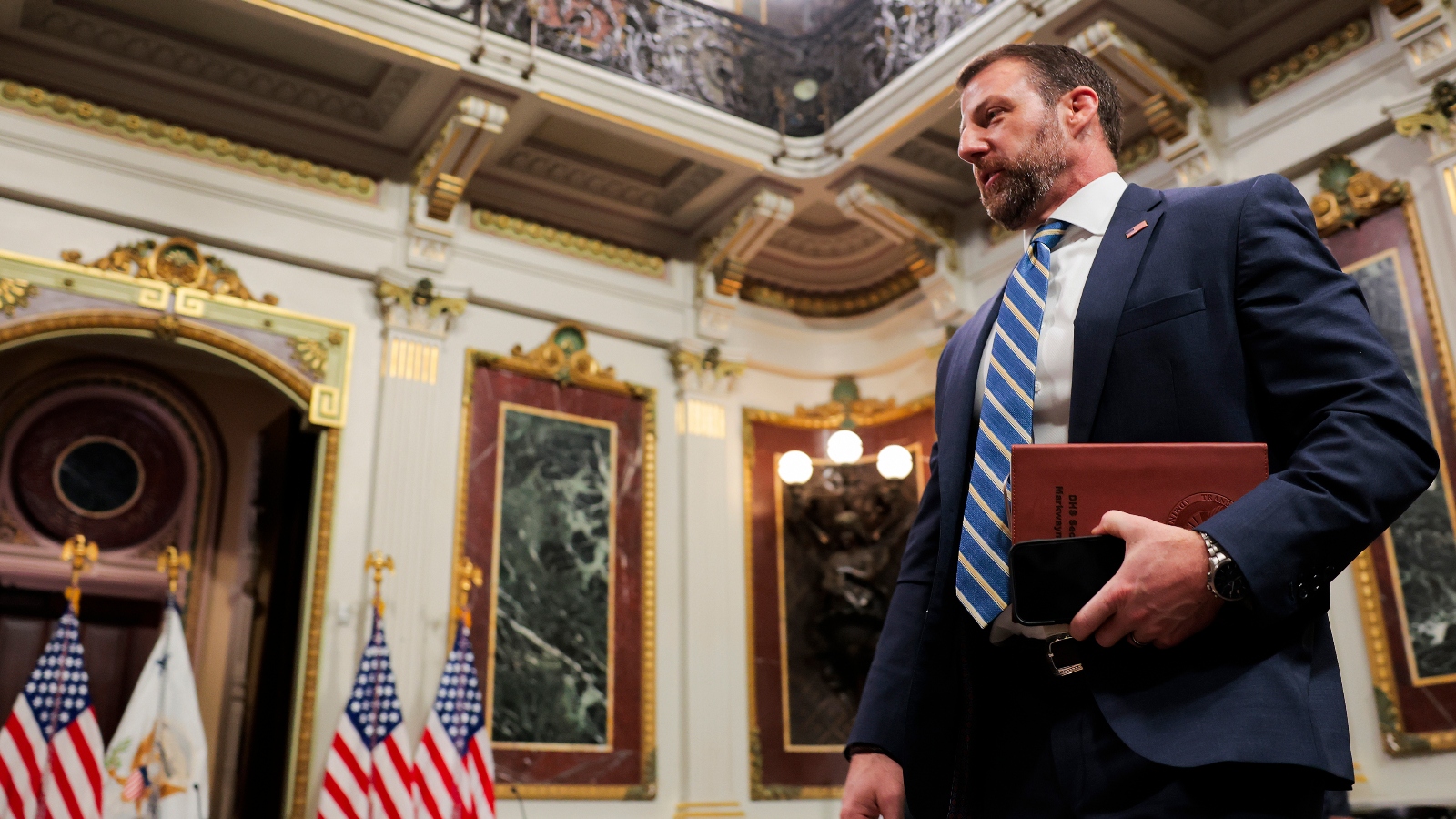
The recent dismissal of Noem — following a series of controversies ranging from immigration enforcement to allegations of misleading Congress — has opened a window for institutional repair. Her successor, former Oklahoma Senator Markwayne Mullin, has entered the role with a mandate to restore FEMA's basic operational capacity.
The cost of a hollowed-out agency
FEMA occupies a singular position in the federal architecture. Created in 1979 by executive order under President Jimmy Carter, the agency consolidated disaster response functions that had previously been scattered across dozens of federal offices. Its central premise is coordination: when a hurricane, wildfire, or flood overwhelms state and local capacity, FEMA serves as the mechanism through which federal resources flow to affected communities. The agency's Disaster Relief Fund — its primary financial instrument — has historically operated as one of the few federal accounts with broad bipartisan support, precisely because natural disasters do not observe political boundaries.
That institutional logic makes the past year's spending freeze particularly consequential. Freezing disaster recovery funds does not merely delay paperwork; it suspends the flow of money to local governments managing debris removal, temporary housing, and infrastructure repair. Communities that had already received presidential disaster declarations found themselves in administrative limbo, unable to access funds that had been formally obligated. The staffing reductions compounded the problem. Disaster preparedness is not a capability that can be switched on and off — it depends on trained personnel, pre-positioned contracts, and rehearsed coordination protocols with state emergency management offices. Each month of attrition erodes institutional knowledge that takes years to rebuild.
The alleged politicization of aid distribution, if substantiated, represents a deeper structural concern. FEMA's credibility rests on the perception that assistance is allocated based on need, not political affiliation. Historical precedents offer a cautionary frame: after Hurricane Katrina in 2005, the agency's failures were widely attributed to leadership deficits and bureaucratic dysfunction, and the reputational damage took the better part of a decade to repair.
Mullin's narrow path forward
Mullin has already moved to fire many of Noem's top deputies and has publicly dismissed the previous spending freeze as unproductive "micromanaging." His most significant promise is the appointment of a permanent administrator to lead FEMA, a position that remained vacant throughout Noem's tenure. The absence of a confirmed administrator for an extended period is itself notable — the role carries statutory authority over disaster declarations, grant disbursements, and interagency coordination that cannot be fully exercised by acting officials.
Yet the structural headwinds facing any rebuilding effort are considerable. Federal hiring processes are slow under normal conditions; reconstituting a workforce after a deliberate reduction is slower still. Pre-disaster mitigation programs — investments in flood barriers, fire-resistant infrastructure, and early warning systems — require multi-year planning cycles. Work that was paused or abandoned cannot simply be resumed at the point of interruption.
The timing adds urgency. Atlantic hurricane season begins in June. Wildfire risk across the western United States intensifies through the summer months. The interval between leadership transition and the next major disaster event is, by historical standards, uncomfortably short.
What remains unresolved is whether Mullin's mandate extends beyond operational triage. Restoring staffing levels and unfreezing funds addresses the immediate deficit, but the deeper question — whether FEMA's mission can be insulated from the political dynamics that led to its paralysis in the first place — sits outside any single appointment's reach. The agency now operates in a landscape where its neutrality has been publicly questioned and its workforce has reason to doubt institutional continuity. Rebuilding capacity is one task; rebuilding trust, both internal and public, is another entirely.
With reporting from Grist.
Source · Grist