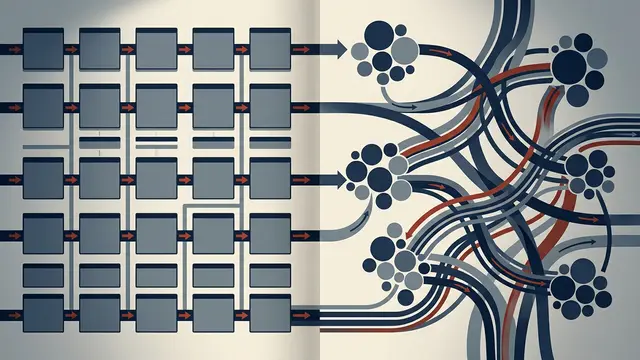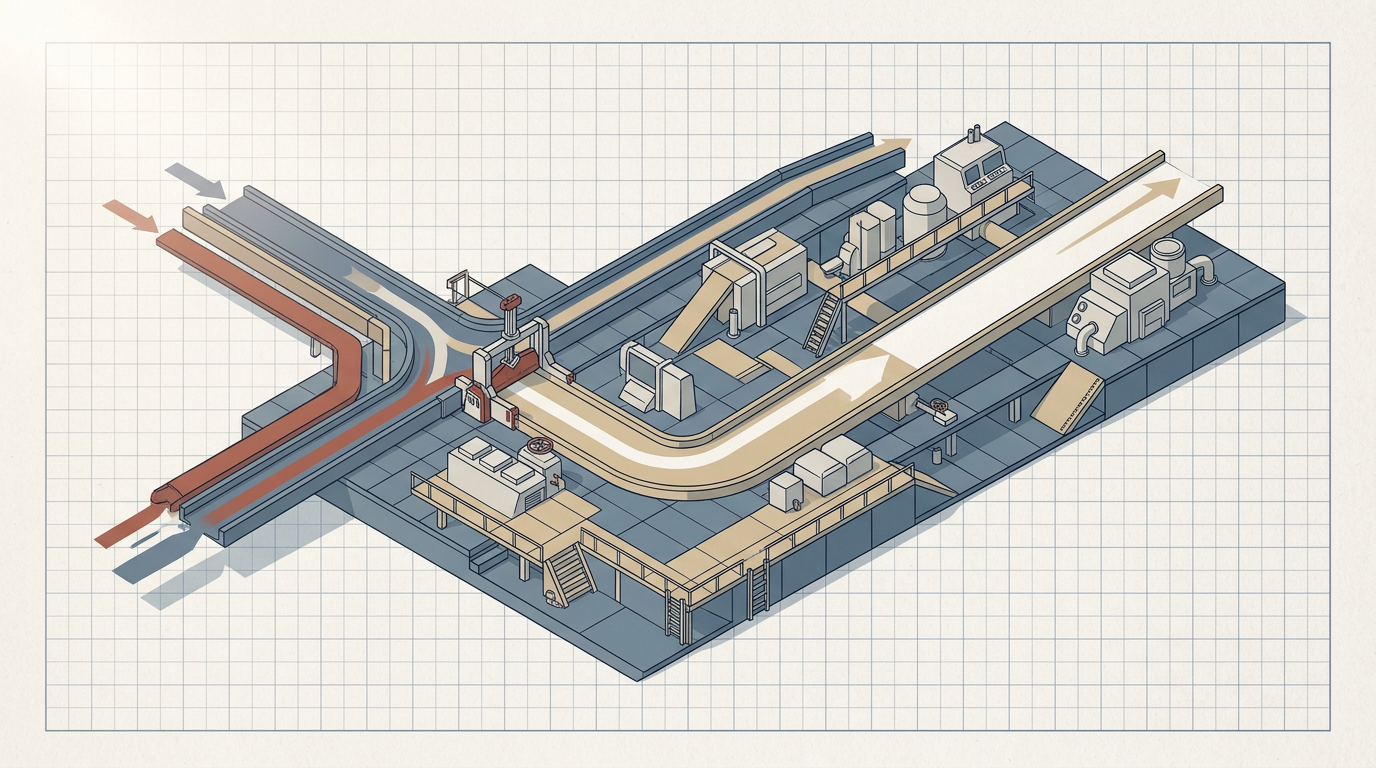
The World Bank has recently signaled a profound departure from its long-standing adherence to neoliberal economic orthodoxy by formally acknowledging the necessity of industrial policy. For decades, the institution served as a primary global proponent of market-led development, consistently advising developing nations against government intervention in favor of deregulation, privatization, and fiscal austerity. This pivot, while seemingly incremental in its articulation, marks a significant shift in the prevailing institutional consensus regarding the state's role in fostering economic growth.
According to Project Syndicate reporting, this change acknowledges that market failures are not merely anomalies to be corrected, but structural realities that require active, mission-oriented state guidance. The institution’s willingness to re-examine the efficacy of state-led investment strategies suggests a recognition that the traditional Washington Consensus—which prioritized market efficiency above all else—has failed to address the complex, multifaceted challenges of the 21st century. This editorial explores whether this pivot represents a genuine recalibration of development economics or merely a rhetorical adjustment to the shifting geopolitical landscape.
The Structural Evolution of Development Economics
To understand the magnitude of this shift, one must consider the historical trajectory of the World Bank’s policy advice. Since the late 20th century, the institution was the architect of a development model that emphasized comparative advantage and the minimizing of state interference. This framework assumed that global markets would naturally allocate resources to where they were most productive, provided that developing nations remained open to trade and maintained stable macro-economic environments. However, the experience of the last three decades has demonstrated that such an approach often left developing economies trapped in low-value-added sectors, unable to bridge the technological divide with advanced nations.
The adoption of industrial policy—the deliberate effort by governments to influence the structure of the economy toward sectors deemed to have higher growth potential—represents a move toward a more proactive, developmental state model. This is not necessarily a return to the protectionist policies of the mid-20th century, but rather an embrace of the idea that the state must act as an investor of first resort, particularly in areas where private capital is hesitant to tread. By acknowledging the role of the state in creating markets rather than just fixing them, the World Bank is aligning itself with contemporary economic research that emphasizes the importance of innovation and technological diffusion.
This shift is also a response to the changing nature of global competition. With the rise of state-capitalist models and the resurgence of geopolitical competition, the limitations of an exclusively market-driven approach have become increasingly apparent. The World Bank, in attempting to remain relevant, is now grappling with the reality that development is not just about getting prices right, but about building the institutional capacity to manage complex industrial ecosystems.
Mechanisms of Institutional Change and Policy Implementation
Translating this theoretical shift into effective policy advice poses a significant challenge for an institution structured around traditional neoliberal metrics. The mechanism of industrial policy is inherently messy; it requires close coordination between the public and private sectors, a high degree of administrative competence, and the ability to pivot when specific projects fail. Historically, the World Bank’s internal incentives were aligned with measurable, short-term outcomes—such as fiscal balance or trade liberalization—rather than the long-term, uncertain payoffs associated with building new industrial capabilities.
For industrial policy to succeed in the context of the World Bank’s mandate, the institution must develop new analytical tools to assess the efficacy of government interventions. This involves moving beyond static cost-benefit analyses toward dynamic assessments that account for learning-by-doing, spillovers, and the creation of new comparative advantages. Furthermore, the institution must grapple with the risk of 'government failure,' a concept that was central to its previous opposition to industrial policy. How can the Bank support states in implementing these policies without replicating the inefficiencies of the past? The answer likely lies in creating rigorous, transparent governance frameworks that emphasize accountability and iterative policy design.
Moreover, the successful implementation of industrial policy requires a departure from the 'one-size-fits-all' approach that characterized the Bank's earlier work. Each nation’s path to industrialization is unique, dictated by its specific resource base, geopolitical position, and institutional history. The challenge for the Bank is to provide advice that is sufficiently flexible to accommodate these variations while maintaining a commitment to the core principles of development and sustainability.
Implications for Global Stakeholders and Markets
The pivot toward industrial policy has significant implications for a wide range of stakeholders, from developing nation governments to international investors and multilateral regulators. For developing nations, this shift offers a long-awaited legitimization of their efforts to pursue national development strategies that prioritize long-term structural transformation over immediate market integration. It provides a new level of policy space, allowing these governments to experiment with tax incentives, research and development subsidies, and local content requirements without the immediate threat of institutional censure.
For international investors and multinational corporations, the shift implies a more complex operating environment. If the World Bank successfully shifts its focus, we may see a greater emphasis on public-private partnerships that are aligned with national development goals rather than purely profit-driven outcomes. This could lead to more stable, long-term investment opportunities, but it also necessitates a higher degree of cooperation with state-led initiatives. Meanwhile, regulators and international trade bodies will face the task of reconciling these national industrial policies with the global rules of trade, potentially leading to new tensions regarding subsidies and market access that will require careful mediation.
The Outlook for Institutional Reform
Despite the significance of this pivot, many questions remain regarding the World Bank’s ability to fully operationalize a new economic paradigm. The institution is still largely defined by its existing personnel, internal processes, and the interests of its major shareholders, all of which may resist a fundamental departure from the status quo. It remains to be seen whether this shift is a top-down mandate that will permeate every level of the organization or if it will be limited to high-level policy papers that lack the teeth to influence actual loan conditions and project implementation.
Looking ahead, the focus must be on the concrete evidence the Bank produces to support its new position. If it can successfully translate its theoretical pivot into real-world success stories, it may provide a roadmap for other multilateral institutions to follow. However, if the implementation remains superficial, the institution risks losing credibility among the very nations it aims to assist. The evolution of this policy will be a key indicator of whether the World Bank can remain a relevant force in a world that is increasingly skeptical of the neoliberal model.
As the World Bank continues to navigate this transition, the tension between its historical identity and its stated desire for a new, more interventionist economic approach remains the central issue. Whether this shift will result in a more effective framework for global development or merely add another layer of complexity to an already difficult process is a question that will occupy economists and policymakers for years to come.
With reporting from Project Syndicate
Source · Project Syndicate