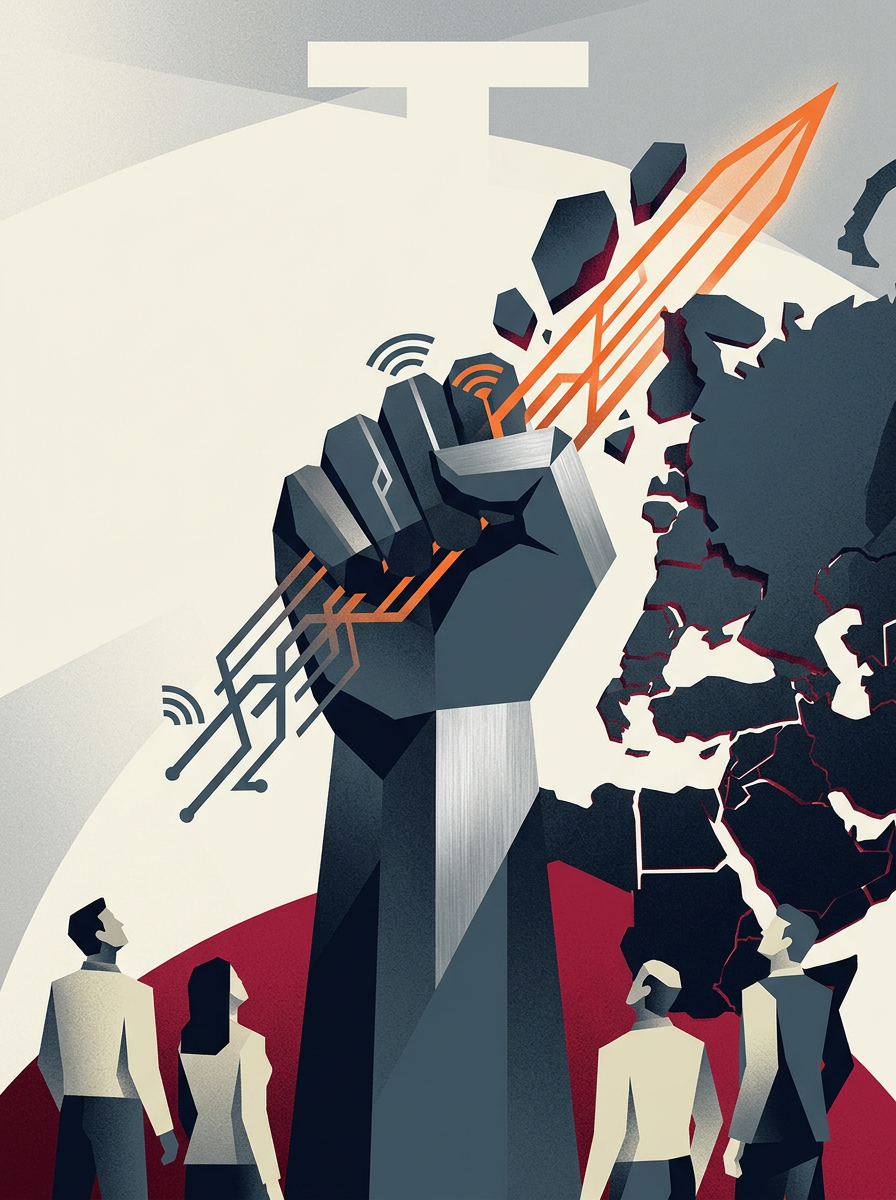
Palantir has long occupied a singular, often uncomfortable space in the American tech ecosystem. Unlike the consumer-facing giants of Mountain View or Cupertino, the data-analytics firm has built its reputation on the less visible machinery of statecraft, intelligence, and surveillance. This week, the company codified its ideological stance in a 22-point manifesto posted to X, summarizing *The Technological Republic*, a book by CEO Alex Karp and Nicholas W. Zamiska.
The manifesto’s central thesis is one of "moral debt." Karp argues that the engineering elite of Silicon Valley have an affirmative obligation to the nation-state that enabled their rise. In this view, the era of the borderless, globalist technocrat is over; in its place is a vision where the survival of Western liberal democracy is inextricably linked to the technological superiority of its military. The document frames the American experiment not as a philosophical abstract, but as a system that must be defended through the "technological revitalization of the military-industrial complex."
The points outlined are intentionally provocative, ranging from a full-throated defense of AI-driven weaponry to a sharp dismissal of contemporary corporate focuses like DEI and "cancel culture." To Karp, these cultural shifts are distractions from the existential necessity of "hard power." By positioning software as the primary engine of national defense, Palantir is attempting to bridge the gap between the agility of a startup and the scale of the Pentagon.
Reactions to the manifesto have been predictably polarized. While critics—including a *New Yorker* review that described Karp’s book as a "playlist of the greatest hits of national decline"—view the vision as a blueprint for an automated and aggressive form of interventionism, Palantir’s supporters see it as a necessary corrective. It is a call to return to a time when American innovation served the strategic interests of the republic first and the global market second.
With reporting from Fast Company.
Source · Fast Company