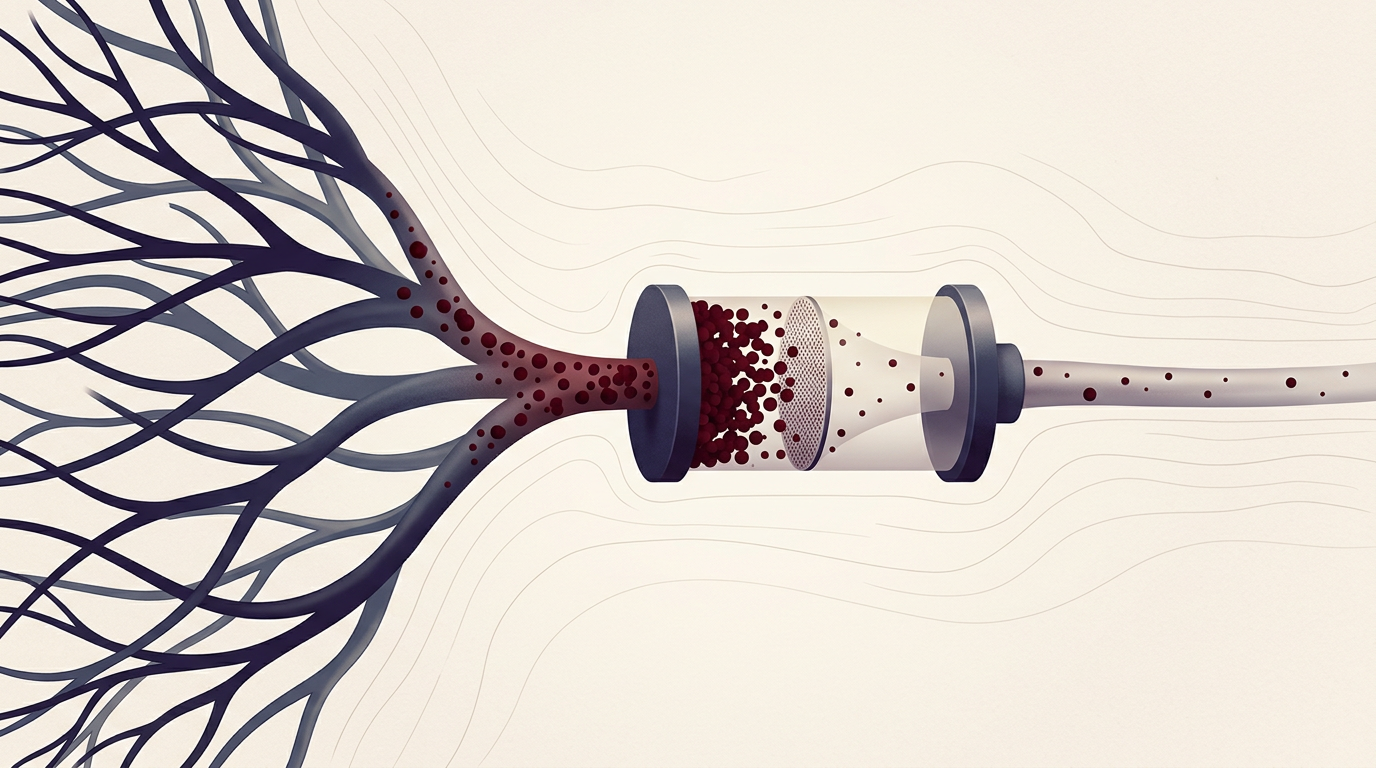
The medical management of pre-eclampsia has remained largely static for decades, characterized by the binary choice of monitoring or premature delivery. According to reporting from The Economist, recent clinical trials exploring the use of extracorporeal blood filtration have provided a potential shift in this paradigm. By targeting the circulating factors that drive the condition’s systemic inflammation, researchers are investigating whether it is possible to mitigate the severity of the disease without immediately terminating the pregnancy.
This development represents a departure from traditional pharmacological approaches, which have historically struggled to address the underlying physiological triggers of pre-eclampsia. The editorial thesis here is not merely that a new device is undergoing testing, but that the transition toward mechanical filtration signals a broader evolution in maternal medicine. By treating the blood as a medium that can be cleaned of toxic proteins, clinicians may finally be moving toward a therapeutic intervention that preserves maternal health while extending gestation for the benefit of the fetus.
The Physiological Challenges of Pre-eclampsia
Pre-eclampsia is defined by high blood pressure and signs of damage to another organ system, most often the liver and kidneys. Its origins are complex, involving abnormal placentation that triggers a cascade of maternal endothelial dysfunction. For years, the primary clinical focus has been on managing the symptoms—specifically hypertension—rather than addressing the circulating factors in the maternal bloodstream that cause the condition to progress. This limitation has forced obstetricians to make difficult decisions regarding the timing of delivery, often resulting in preterm births that carry their own significant health risks for the infant.
Historically, the medical community has viewed the placenta as the source of the problem, leading to the consensus that delivery is the only definitive cure. While this remains fundamentally true, the introduction of blood filtration techniques suggests a middle ground. By filtering out specific proteins or anti-angiogenic factors that are released into the blood as a result of placental distress, clinicians hope to stabilize the mother’s condition. This approach acknowledges that while the placenta is the origin, the systemic maternal response is what determines the immediate danger. If this response can be dampened or paused, the window of time for fetal development can be extended safely.
This structural shift in thinking mirrors advancements in other fields, such as nephrology or critical care, where extracorporeal therapies are used to manage acute organ failure. Applying these principles to maternal health requires a delicate balance, as the procedure must be safe for both mother and fetus. The emergence of these trials indicates that we are moving toward a more sophisticated understanding of pregnancy-related pathology, where systemic circulation is viewed as a manageable environment rather than a fixed physiological state.
Mechanisms of Intervention and Clinical Efficacy
The mechanism behind these blood filtration techniques centers on the removal of pathogenic substances that circulate in the mother’s blood. In pre-eclampsia, the placenta releases factors that cause the maternal blood vessels to constrict and become leaky, leading to the hallmark symptoms of high blood pressure and organ damage. By passing the mother's blood through a specialized filter, these harmful proteins can be sequestered or removed before they can cause further systemic damage. This is a targeted mechanical intervention that does not rely on the systemic administration of drugs, which often carry risks of side effects for the fetus.
The effectiveness of this approach in early trials hinges on the ability to identify the specific targets for filtration. If the filter can selectively remove the toxic proteins while preserving essential blood components, it could theoretically halt the progression of the disease. This is a significant logistical and technical hurdle, as the blood must be processed efficiently without causing clotting or depletion of necessary nutrients. The success of these initial trials suggests that the technology has reached a point where such precision is possible, yet the transition from controlled clinical environments to routine obstetric practice remains a significant challenge that will require rigorous validation.
Furthermore, the integration of these devices into standard care protocols involves more than just technical efficacy. It requires a fundamental shift in the infrastructure of maternity wards. Unlike a pill, blood filtration requires specialized equipment, trained technicians, and a sterile environment that is not always available in standard delivery suites. The scalability of this treatment is therefore tied to the development of portable, user-friendly filtration systems that can be deployed rapidly when a patient shows signs of deteriorating health. The mechanism is sound in theory, but its clinical utility will be defined by how easily it can be integrated into the high-pressure, time-sensitive environment of labor and delivery.
Implications for Stakeholders and Regulatory Hurdles
For regulators, the introduction of blood filtration for pre-eclampsia presents a distinct challenge. Devices of this nature often sit at the intersection of medical equipment and therapeutic intervention, potentially requiring more stringent oversight than traditional obstetric tools. The burden of proof for safety is exceptionally high given the vulnerability of both the mother and the fetus. Any regulatory pathway must account for the dual-patient nature of the treatment, ensuring that the removal of proteins does not inadvertently deprive the fetus of essential factors necessary for development.
Competitors in the medical device space are likely to watch these trials closely. If successful, this could create a new market for specialized maternal-fetal filtration devices. Manufacturers will need to weigh the costs of development against the potential for widespread adoption, particularly in healthcare systems that prioritize cost-effective, non-invasive solutions. For patients, the promise is clear: a reduction in the rate of medically indicated preterm births. However, the cost of such technology may create disparities in access, with high-resource hospitals being the first to implement these systems, potentially leaving rural or low-resource settings behind. The challenge for policymakers will be to ensure that these advancements do not exacerbate existing inequalities in maternal health outcomes.
The Outlook for Maternal Health Innovation
While the results from early trials are encouraging, they should be viewed with a measure of caution. The history of maternal medicine is littered with promising interventions that failed to translate into broad clinical success due to the sheer complexity of pregnancy. We must determine whether these filtration methods provide a sustained benefit or merely a temporary reprieve that delays, rather than prevents, the need for delivery. Long-term follow-up data will be essential to understand the impact on both maternal recovery and neonatal development.
Furthermore, the question of cost-effectiveness remains largely unanswered. Even if the technology is proven safe and effective, the expense associated with specialized filtration equipment may limit its use to the most severe cases. Future research will need to establish clear clinical criteria for when to intervene and how many sessions are required to achieve a meaningful improvement in outcomes. As the data continues to accumulate, the medical community will need to reconcile these mechanical interventions with the biological reality of the placenta, keeping a close watch on how these filters perform in larger, more diverse patient populations.
The path from experimental trial to standard clinical care is rarely linear, particularly in a field as sensitive as obstetrics. As researchers refine the filtration process and gather more robust data on long-term outcomes, the possibility of transforming pre-eclampsia from a condition that demands early delivery into one that can be managed becomes increasingly plausible. Whether this technology will redefine the standard of care remains an open question for the coming years.
With reporting from The Economist
Source · The Economist — Science & Technology