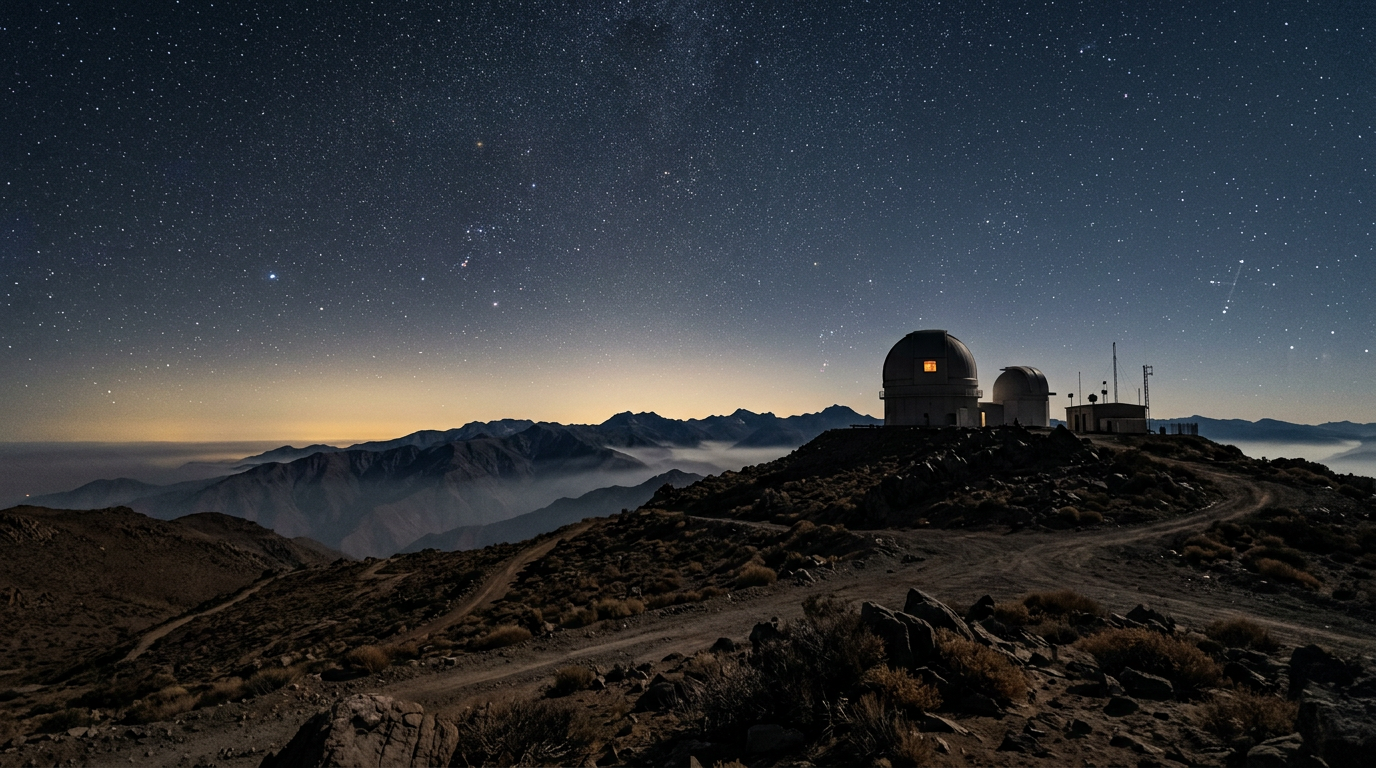
In the vast, sparsely populated expanse of West Texas, a unique convergence of conservation and cosmology is unfolding. The McDonald Observatory, perched atop Mount Locke and Mount Fowlkes, houses the powerful Hobby-Eberly Telescope. This instrument is the centerpiece of a monumental scientific undertaking: the Hobby-Eberly Telescope Dark Energy Experiment (HETDEX). According to reporting from The New York Times, this project aims to create the largest-ever three-dimensional map of the cosmos to probe the nature of dark energy, the enigmatic force driving the accelerated expansion of the universe. The experiment’s success, however, depends not only on sophisticated optics and sensors but on a more elemental resource: profound darkness.
The research is enabled by the region’s status as the core of the Greater Big Bend International Dark Sky Reserve, the largest such protected area on Earth. This designation is the result of years of deliberate effort by residents, businesses, and conservationists to shield the night from the encroaching glare of artificial light. The story of HETDEX is therefore not merely one of astronomical discovery. It is a compelling case study in how terrestrial conservation has become an indispensable prerequisite for frontier science, illustrating that the quest to understand the universe’s deepest secrets is inextricably linked to our ability to preserve natural darkness here on Earth.
The Geopolitics of Starlight
The concept of a “dark-sky reserve” is a modern response to an ancient loss. For most of human history, the Milky Way was a nightly spectacle. Today, for more than 80% of the world’s population, it is obscured by the perpetual twilight of light pollution. A dark-sky reserve is a formal designation for an area possessing an exceptional quality of starry nights and a nocturnal environment that is protected for its scientific, natural, and cultural value. The Greater Big Bend International Dark Sky Reserve, certified in 2022, is a landmark achievement in this movement, covering over 15,000 square miles and uniquely spanning an international border to include protected lands in both Texas and Mexico. This binational cooperation underscores a shared recognition that the night sky is a shared heritage, oblivious to terrestrial boundaries.
This preservation is not a passive state but an active, ongoing struggle. The primary threat to Big Bend’s darkness emanates from the east: the Permian Basin, one of the most productive oil and gas fields in the world. The relentless 24/7 activity of drilling rigs, processing plants, and worker settlements casts a significant “sky glow” that threatens to bleach the faint starlight reaching the McDonald Observatory. The observatory’s very function is contingent on winning a quiet, persistent campaign of persuasion and technological adaptation with the energy industry.
This tension transforms the dark-sky reserve from a simple conservation area into a complex geopolitical and economic landscape. The value of darkness is pitted against the immense economic engine of the fossil fuel industry. The success of the reserve, therefore, hinges on a delicate symbiosis, where astronomers and conservationists must act as diplomats, advocating for practices like shielded, downward-facing lighting and the use of specific light spectrums that are less disruptive to telescopes. This effort highlights that preserving a scientific resource like a dark sky is as much about social engineering and industrial policy as it is about ecology.
Charting the Void
The scientific prize that justifies this immense effort is a deeper understanding of dark energy. Discovered in the late 1990s, this mysterious pressure accounts for nearly 70% of the universe's energy density and is responsible for causing its expansion to speed up over time, a finding that earned its discoverers the 2011 Nobel Prize in Physics. While its effects are observable on a cosmic scale, its fundamental nature remains one of the greatest unsolved puzzles in modern physics. HETDEX is designed to attack this problem by meticulously mapping the universe's structure during a specific epoch, roughly 10 to 11 billion years ago, when dark energy’s influence began to dominate over gravity.
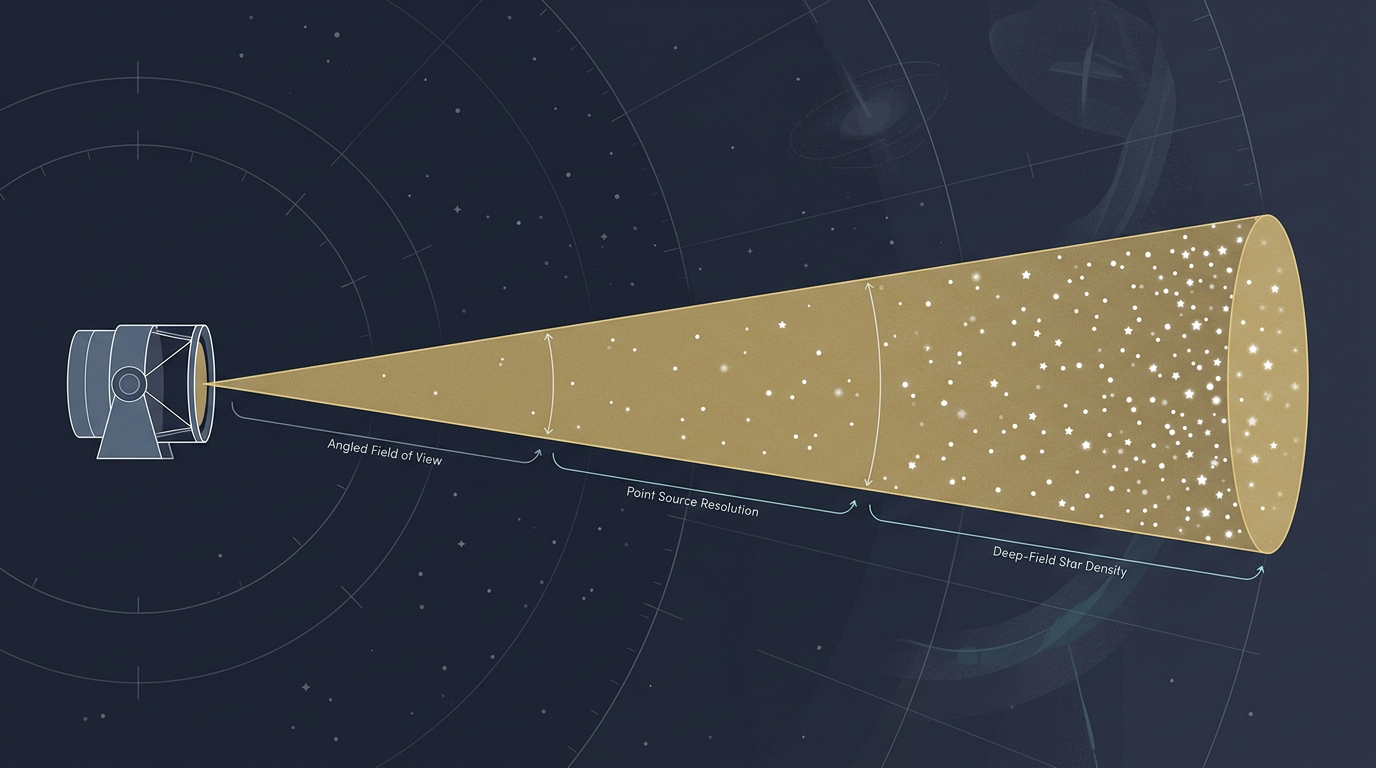
To achieve this, the Hobby-Eberly Telescope is equipped with an array of 156 spectrographs collectively known as the Visible Integral-field Replicable Unit Spectrograph (VIRUS). This instrument allows the telescope to capture the light signatures, or spectra, from up to 35,000 points in the sky simultaneously. By analyzing the light from millions of distant galaxies, astronomers can determine their distance and velocity, gradually building a 3D map. The subtle patterns in the distribution of these galaxies—imprints left over from the Big Bang—serve as a “standard ruler” to measure the rate of cosmic expansion at different points in time. Any deviation from expected patterns can provide crucial clues about the properties of dark energy.
The faintness of the target galaxies makes this work exquisitely sensitive to light pollution. The light from a galaxy 11 billion light-years away is an unimaginably faint signal. Any extraneous light, whether from a distant oil rig or a passing car, can overwhelm it, rendering the data useless. The pristine darkness of the Big Bend region is not merely helpful; it is the medium in which the experiment operates. It is the functional equivalent of the sound-proofed room for a recording artist or the clean room for a semiconductor fabricator—an essential, non-negotiable condition for success.
An Unlikely Alliance
The implications of the Big Bend experiment extend beyond cosmology. It serves as a powerful model for the coexistence of large-scale industrial activity and cutting-edge scientific research. The relationship between the McDonald Observatory and the Permian Basin energy companies is not purely adversarial. Through years of outreach and collaboration, the observatory has successfully encouraged many operators to adopt dark-sky-friendly lighting practices. This pragmatic approach, focusing on mutual benefit—where companies can improve efficiency and safety while reducing their environmental impact—has been more effective than outright opposition.
This symbiotic relationship provides a template for other major scientific facilities around the world facing similar threats from urbanization and industrialization. It demonstrates that the preservation of scientific “wilderness,” like dark skies or radio-quiet zones, requires proactive engagement with all stakeholders, including those perceived as antagonists. For local communities in West Texas, the observatory and the dark-sky designation provide a distinct identity and a source of tourism revenue, creating a local economic incentive to support the conservation efforts. This multi-stakeholder alignment is fragile but essential for long-term viability.
The Persistent Glow
Despite the successes, the future of ground-based astronomy in an increasingly illuminated world remains uncertain. The voluntary agreements with oil companies are not universally adopted, and the sheer scale of development in the Permian Basin means that the ambient sky glow continues to be a persistent threat. The vigilance required to maintain the darkness is perpetual. A more systemic challenge, however, is emerging in orbit. The proliferation of satellite mega-constellations, such as SpaceX's Starlink, introduces thousands of new points of light into the night sky. These satellites streak across astronomical images, creating trails of corrupted data that are difficult and sometimes impossible to remove.
Unlike terrestrial light pollution, which can be mitigated with local ordinances and agreements, satellite trails are a global problem that requires international policy and regulation. The very technology designed to connect humanity is inadvertently threatening our ability to see beyond ourselves. What to watch next are the first major data releases from the HETDEX survey, which will offer the most detailed look yet at the universe's teenage years. Simultaneously, the astronomical community's efforts to negotiate with satellite operators and advocate for international regulations will determine the long-term feasibility of ground-based observatories like McDonald.
In West Texas, the struggle to see the stars is a microcosm of a larger challenge. The project to map the universe's expansion is fundamentally an investment in knowledge, a pursuit driven by human curiosity. Yet its success is tethered to a very terrestrial, and increasingly difficult, act of restraint: the willingness to turn down the lights. As the data from HETDEX slowly reveals the history of the cosmos, the dark skies of Big Bend will remain a testament to the idea that sometimes, the most profound discoveries are made in what we choose to preserve.
With reporting from The New York Times — Science
Source · The New York Times — Science