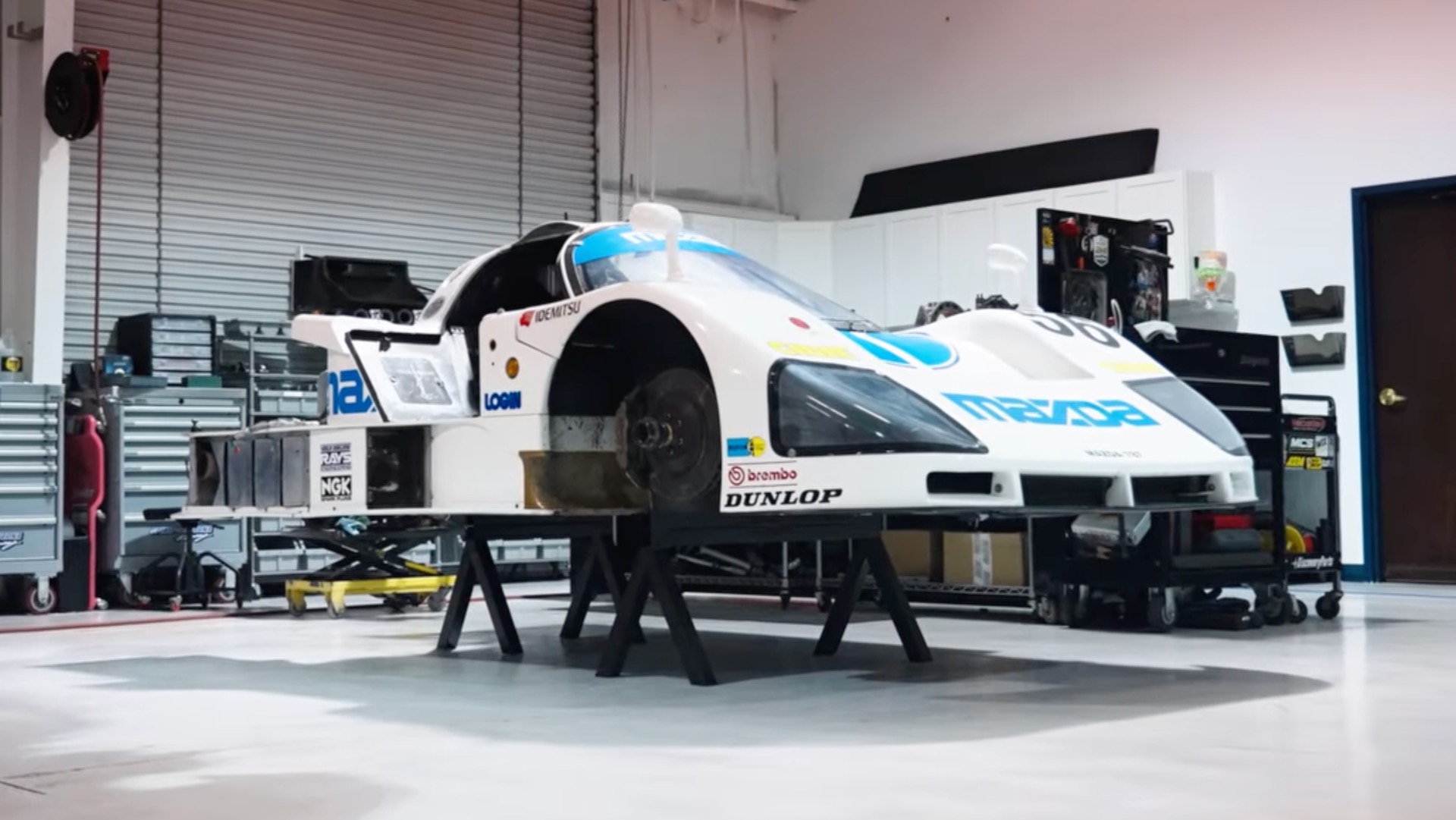
In 1991, the high-pitched wail of the Mazda 787B echoed across the Circuit de la Sarthe, marking the sole occasion a rotary engine triumphed at the 24 Hours of Le Mans. Beyond a mere technical victory, this achievement immortalized the four-rotor R26B engine, a 700-horsepower unit capable of reaching 9,000 rpm. Now, the Japanese brand's motorsport division has opted to open its workshop doors to demonstrate that this icon is not destined to remain merely a static museum exhibit.
Maintaining an engine of such complexity in operational condition demands meticulous engineering effort. Unlike the two-rotor engines found in contemporary street cars, the R26B employs three spark plugs per rotor to optimize fuel combustion and ceramic *apex seals* to withstand extremely high revolutions without the metallic "skip" common at elevated RPMs. The recently released Mazda documentary details how the team addresses component scarcity and the remarkable durability of parts that have endured track conditions.
This initiative reflects a philosophy of active preservation: the conviction that engineering history should be heard and felt, not merely observed under the cool lights of a gallery. By ensuring the 787B continues to spit flames from its exhausts during public demonstrations, Mazda reaffirms the identity of a brand that has historically never shied away from investing in unconventional mechanical solutions.
*With information from The Drive.*
Source · The Drive