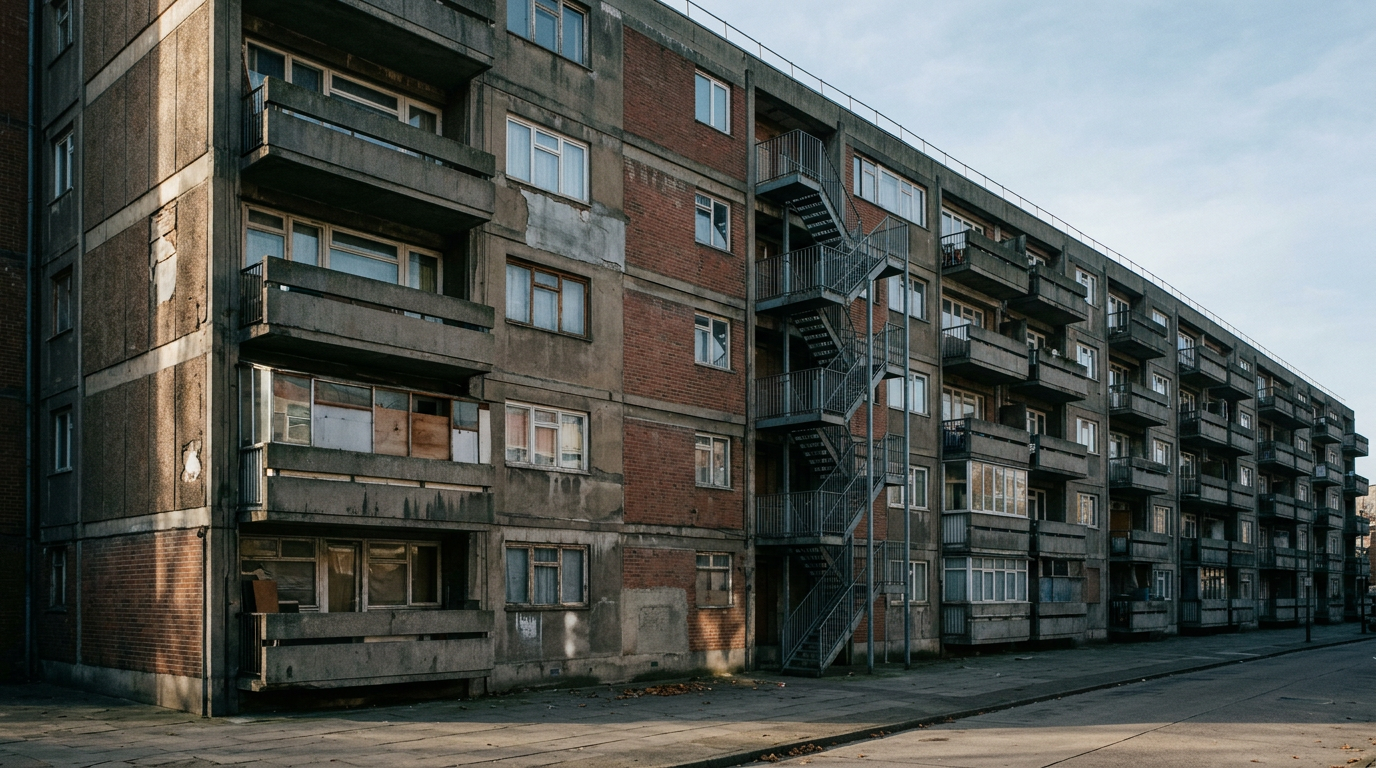
The morning light hits the facade of a mid-century tenement, revealing a history of incremental modifications—a fire escape added here, a subdivided balcony there, a lobby repurposed to accommodate a new mail room. These structures are not merely containers for human activity; they are the physical manifestations of complex legal and economic frameworks. In cities from ancient Rome to contemporary London or New York, the tension between the desire for stable housing and the forces of property speculation has dictated the very geometry of the built environment. When governments intervene to freeze rents, they do not simply affect the balance sheets of landlords and tenants; they alter the incentives for maintenance, renovation, and new construction, effectively freezing a moment in time within the urban landscape.
According to reporting from The Architectural Review, the interplay between rent regulation and property development is a recurring historical phenomenon. While modern policy debates often focus on the immediate effects of caps on affordability and supply, the long-term impact on the city’s architectural evolution is rarely centered in the discourse. To understand the future of our urban centers, we must look beyond the spreadsheet and consider how these policies shape the physical reality we inhabit, influencing everything from the preservation of historic stock to the design of new, high-density residential towers.
The Historical Echo of Urban Regulation
The history of rent control is as old as the concept of the city itself. Since Roman times, when the rapid influx of populations into urban centers created extreme pressure on housing, authorities have struggled to balance the rights of property owners with the basic needs of the citizenry. The Roman state often faced the reality of housing shortages that mirrored the crises seen in modern global hubs. When speculation pushed rents beyond the reach of the average worker, the resulting social instability forced the hand of the state to impose various forms of intervention. These early measures were not merely economic tools; they were attempts to maintain the stability of the urban fabric by ensuring that the city remained a place where its essential laborers could afford to live.
This historical context suggests that rent controls are not a modern invention but a structural response to the inherent volatility of housing markets. In periods of rapid urbanization, when the demand for space outstrips the supply, speculation becomes the default mode of operation for capital. This leads to a specific type of architectural output: buildings designed for maximum turnover, minimal maintenance, and high density, often at the expense of livability. Rent freezes, when they occur, act as a structural brake on this process. They force a shift in the way capital is deployed, pushing investors to either seek higher returns elsewhere or to find ways to extract value through the renovation and reconfiguration of existing, regulated stock.
The Mechanics of Architectural Stagnation and Innovation
When rent caps are implemented, the economic incentives for property owners change dramatically. In a market where rental income is fixed, the cost of maintenance and capital improvements can quickly become a liability rather than an investment. This often leads to a phenomenon where buildings are allowed to degrade, as the landlord has no incentive to upgrade facilities that will not produce a higher return. The result is a visible decline in the quality of the urban environment, where the architectural integrity of a neighborhood is slowly eroded by deferred maintenance. This is the most common critique of rent control, yet it is only one side of the coin.
Conversely, these same constraints can drive a unique form of architectural innovation. When owners are unable to increase rents on existing units, they often look toward vertical expansion or the conversion of underutilized spaces to increase the total number of rentable units. This has historically led to the creation of inventive, if sometimes cramped, living arrangements that define the character of many historic city districts. The pressure to maximize density within a fixed rent framework forces architects to rethink the use of every square inch. We see this in the transformation of industrial lofts, the sub-division of large apartments into smaller studios, and the creative use of light wells and internal courtyards. In this sense, rent control does not just freeze the city; it forces it to adapt in ways that are often unintended by the regulators.
Stakeholders in the Regulated City
The impact of these policies ripples across a diverse group of stakeholders, each with competing interests and different visions for the urban future. For the tenant, the primary benefit is the preservation of community and the prevention of displacement, which allows for the social fabric of a neighborhood to remain intact over decades. However, this stability often comes at the cost of limited housing mobility, as tenants become tethered to their regulated units, unable to move even when their life circumstances change. For the regulator, the challenge is to balance these social benefits against the risk of creating a stagnant housing market that fails to attract the investment necessary for long-term urban renewal.
Competitors in the real estate sector, particularly large-scale developers, often view rent controls as a direct threat to the feasibility of new projects. If the potential return on investment is curtailed by government intervention, capital flows toward luxury markets or commercial developments, further exacerbating the shortage of affordable housing. This tension creates a bifurcated city: one half composed of protected, aging, and potentially deteriorating stock, and the other half consisting of high-end, market-rate developments that are increasingly inaccessible to the average citizen. This divide is not just a matter of economics; it is a fundamental shift in the visual and social landscape of the modern metropolis.
The Uncertain Horizon of Urban Density
The question remains as to whether a middle path exists—a way to regulate housing markets without triggering the architectural and social stagnation that often follows. As cities continue to grapple with the dual crises of affordability and climate change, the role of the built environment becomes increasingly central. Can we design policies that encourage the maintenance of existing housing while simultaneously incentivizing the creation of new, sustainable, and affordable units? The answer likely lies in a more nuanced approach to urban planning that treats housing not just as an asset class, but as a critical piece of infrastructure.
Looking ahead, we must watch how emerging technologies in building management and modular construction might interact with these regulatory frameworks. If we can lower the cost of maintenance and construction through innovation, the pressure on rent controls may shift. However, as long as land remains a finite and speculative resource, the conflict between the desire for profit and the need for shelter will continue to shape our skylines. The city of the future will be a product of these ongoing negotiations, a physical record of our collective attempts to solve the age-old problem of living together in limited space.
Ultimately, the architecture of our cities serves as a silent witness to the policies that govern them. Whether through the preservation of historic facades or the rise of new, dense residential towers, the built form reflects the compromises we make between market forces and social equity. As these dynamics continue to evolve, the question of how we define the value of a home, and the role of the state in protecting it, remains open.
With reporting from Architectural Review
Source · Architectural Review