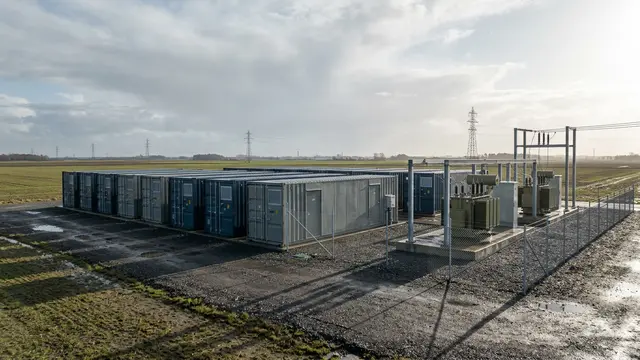
India’s energy transition roadmap is anchored by a staggering requirement for 411 gigawatt-hours (GWh) of battery energy storage systems (BESS) by 2032. This infrastructure is intended to serve as the backbone for integrating intermittent renewable energy sources, such as solar and wind, into a grid that is undergoing rapid decarbonization. According to Forbes reporting, the current procurement frameworks governing this massive rollout are heavily reliant on a single, industry-standard metric: the upfront cost per kilowatt-hour (kWh). While this metric provides a convenient benchmark for initial capital expenditure, it increasingly appears to be a misleading indicator of long-term economic viability for utilities and grid operators.
The central thesis of this analysis is that the industry's singular focus on initial procurement costs obscures the true economic profile of high-cycling battery assets. By prioritizing the lowest sticker price, utilities are inadvertently incentivizing the deployment of battery chemistries and configurations that may underperform over their operational life cycles. As India scales its storage capacity to meet its 2032 targets, the disconnect between procurement benchmarks and the actual lifecycle costs of these assets threatens to impose billions of dollars in hidden expenses on the national energy system, ultimately affecting both utility balance sheets and consumer tariffs.
The Fallacy of Upfront Capital Benchmarking
The reliance on cost-per-kWh as a primary procurement metric is a legacy of the early days of battery adoption, when the priority was simply to make energy storage economically feasible compared to traditional fossil-fuel-based peaking plants. In that context, reducing capital intensity was the primary hurdle to adoption. However, as the scale of deployment reaches the gigawatt-hour level, the operational profile of these assets has shifted dramatically. Modern grid-scale batteries are no longer just passive backup systems; they are frequently cycled multiple times per day to participate in ancillary services, frequency regulation, and load shifting.
This shift in usage patterns necessitates a transition from capital-expenditure-focused procurement to a total-cost-of-ownership model. When utilities evaluate bids based solely on the upfront cost, they fail to account for the degradation rates associated with high-cycle duty. A battery system that appears cheaper on paper may have a lower cycle life, requiring premature replacement or significant capacity augmentation within a few years of installation. This creates a "debt" of future capital expenditures that is rarely factored into current procurement decisions, leading to a distorted view of project economics that favors short-term balance sheet management over long-term system efficiency.
Furthermore, the current procurement environment encourages a "race to the bottom" regarding technology quality. Manufacturers, seeking to win contracts in a competitive tender process, are incentivized to optimize for the lowest possible initial cost, often at the expense of thermal management systems, advanced battery management software, and high-durability cell chemistries. This structural incentive structure effectively penalizes vendors who prioritize longevity and reliability, as their higher-quality, longer-lasting products are consistently priced out by competitors who focus on minimizing the initial capital outlay.
Mechanisms of Economic Distortion
The mechanism through which this metric causes financial leakage is rooted in the decoupling of procurement incentives from operational reality. In a typical grid-scale battery installation, the cost of the cells is only one component of the total system cost. Balance-of-system costs, including power conversion systems, cooling, and safety infrastructure, are significant. When utilities prioritize the lowest cost-per-kWh, they often accept systems with inferior battery management systems (BMS) that cannot effectively manage the stresses of high-frequency cycling. This lack of sophisticated control leads to accelerated degradation, which in turn necessitates more frequent cycling limitations or earlier-than-planned decommissioning.
The economic impact is compounded by the opportunity cost of asset downtime. If a battery system requires maintenance or replacement due to premature degradation, the utility loses not only the asset itself but also the ability to monetize the storage capacity in the energy markets. In a market like India, where grid stability is a primary objective, the inability to rely on storage assets during peak demand periods can lead to increased reliance on expensive, carbon-intensive peaking plants. Thus, the decision to save money during the procurement phase results in a cascading effect of higher operational costs, reduced grid resilience, and increased carbon intensity, all of which ultimately manifest as higher costs for the end-user.
Implications for Regulators and Market Participants
The implications of this procurement misalignment extend across the entire energy ecosystem. For regulators, the challenge lies in updating tender frameworks to reflect the realities of asset longevity. Moving toward a "levelized cost of storage" (LCOS) model—which incorporates cycle life, degradation rates, and operational efficiency—is a necessary, albeit complex, evolution. Regulators must resist the urge to simplify procurement for the sake of speed and instead enforce standards that reward long-term durability. This shift would likely require a more granular verification process for vendor claims regarding cycle life and performance guarantees, potentially increasing the administrative burden on both regulators and bidders.
For competitors and technology providers, this environment creates a strategic tension. Companies that invest in high-performance, long-cycle battery chemistries, such as lithium iron phosphate (LFP) variants designed for longevity or alternative long-duration storage technologies, find themselves at a disadvantage in current bidding cycles. If the market continues to prioritize upfront cost, these innovators may be forced to compromise on quality or exit the market entirely. Conversely, if the regulatory framework evolves to value lifecycle performance, those who have invested in robust technology will be well-positioned to capture a larger share of the market, provided they can clearly articulate the long-term value proposition to risk-averse utilities.
The Outlook for India’s Storage Ambitions
As India moves toward its 2032 target, the uncertainty surrounding the actual performance of the installed base remains a significant risk. If the current trend of prioritizing upfront cost persists, the nation may find itself with a massive fleet of storage assets that are aging far faster than anticipated. This would necessitate a massive "re-powering" cycle in the late 2020s and early 2030s, creating a secondary capital expenditure crisis just as the grid is expected to be at its most dependent on these assets. Watching the performance metrics of the first major waves of deployments will be critical in determining whether a mid-course correction is required.
Ultimately, the question of whether India can achieve its storage goals efficiently depends on its ability to evolve beyond simplistic procurement metrics. The transition from a focus on capital expenditure to a focus on operational lifecycle value is not merely a technical adjustment; it is a fundamental shift in how the utility sector perceives and manages long-term infrastructure assets. Whether policymakers will prioritize the immediate political optics of low procurement costs or the long-term fiscal health of the national grid remains a central tension in the country’s energy future.
The evolution of India’s energy storage landscape remains a complex balancing act, where the immediate pressure to scale capacity often conflicts with the need for long-term economic sustainability. As the industry continues to grapple with the realities of high-cycle operations, the path toward a truly efficient and resilient grid will likely require a move away from legacy metrics toward more sophisticated, performance-oriented procurement frameworks.
With reporting from Forbes
Source · Forbes — Business