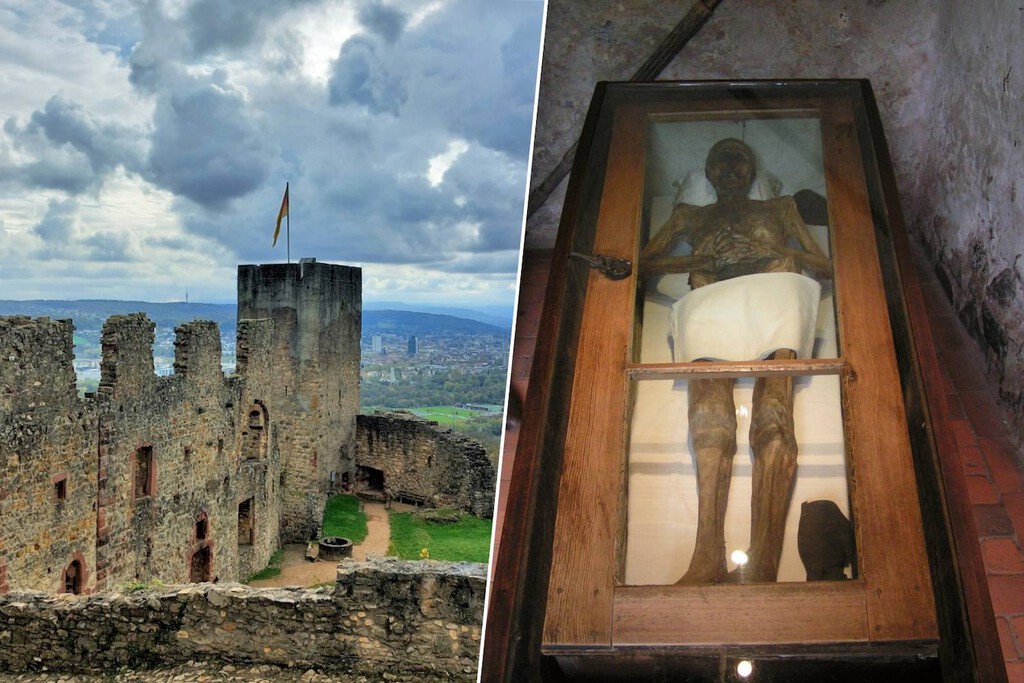
In the tranquil village of Kampehl, Brandenburg, rests one of Europe's most compelling biological enigmas. Christian Friedrich von Kahlbutz, a Prussian feudal lord who died in 1702, has become an object of study not for his life's achievements, but for the state of his remains. Unlike his contemporaries, whose bodies succumbed to time, Kahlbutz's corpse remains in an exceptional state of preservation, defying natural decomposition for over three centuries.
The discovery occurred in 1794, during renovations of the local church. While workers found only bones and dust in neighboring coffins, they encountered an intact figure with desiccated, leathery skin and still-recognizable facial features. What renders the case singular is the complete absence of artificial embalming; the mummification occurred spontaneously, a result of specific environmental conditions within the crypt that halted the biological cycle of putrefaction.
Identified by the initials on his shroud, the "Knight of Kahlbutz" has become a scientific and historical curiosity. Subsequent studies have attempted to decipher whether diet, lifestyle, or the crypt's peculiar ventilation favored his preservation, yet the phenomenon persists as a reminder that biology still holds secrets regarding the cessation of life. The Prussian nobleman remains one of the continent's best-preserved natural mummies, a human relic suspended in time.
With information from Xataka.
Source · Xataka