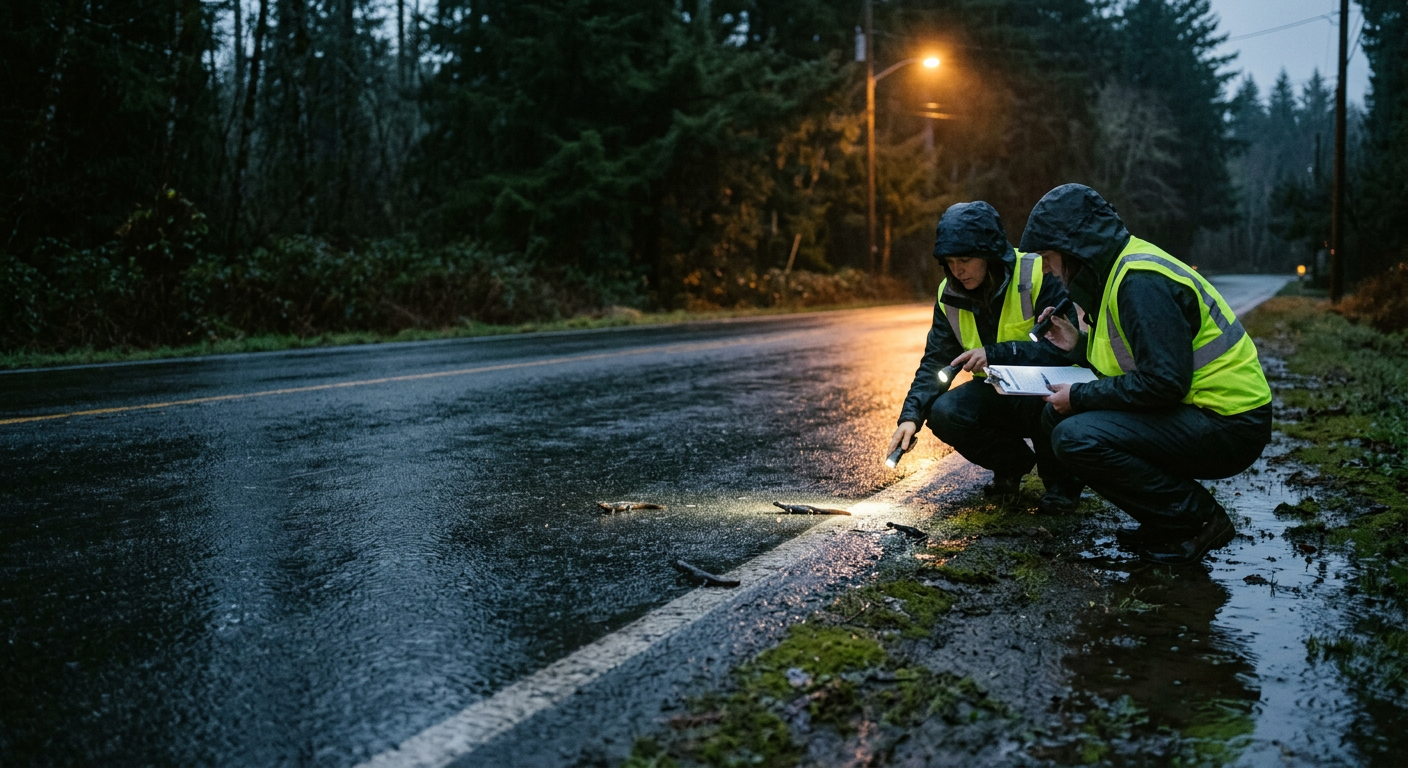
On a rainy Tuesday night in April, a stretch of road in Cumberland, Maine, became the site of an unusual, highly coordinated effort. As temperatures rose and the spring thaw took hold, thousands of frogs and salamanders emerged from the forest to reach their ancestral vernal pools. They were met not only by the hazards of modern infrastructure but by a growing army of volunteers, armed with flashlights and neon vests, acting as both crossing guards and data collectors. According to reporting from Grist, this event—colloquially known as “Big Night”—has evolved from a grassroots rescue operation into a sophisticated exercise in environmental monitoring.
This shift from simple intervention to rigorous observation reflects a broader realization among conservationists: the annual migration is a high-resolution window into the health of local ecosystems. As climatic volatility scrambles the timing of these movements, the amphibians serve as a tangible bioindicator, signaling the profound disruptions occurring within the forest and the wetlands they inhabit. The data gathered by over 1,200 volunteers across hundreds of sites is now being utilized to push for structural changes in how municipalities manage road maintenance and deicing, highlighting the intersection between local governance and climate adaptation.
The Anatomy of a Shifting Seasonal Rhythm
Amphibians are uniquely tethered to the moisture and temperature cycles of their environment. Their survival depends on a precise alignment of environmental cues—the thawing of the ground, the arrival of spring rains, and the stability of vernal pools. Historically, these cycles were predictable, allowing populations to thrive in the delicate balance of New England’s forests. However, climate change has introduced a level of instability that threatens the very foundation of this migration. Warmer, erratic winters can lead to premature emergence, leaving these cold-blooded creatures vulnerable to sudden, lethal freezes when the warmth inevitably subsides.
Beyond the immediate threat of temperature fluctuations, the loss of consistent moisture levels poses a structural danger. Vernal pools, essential for breeding, are increasingly susceptible to drying out due to shifting precipitation patterns. This creates a cascade effect: if the pools disappear or become uninhabitable too early in the season, the reproductive cycle is severed. The migration, therefore, is not merely a biological imperative; it is a stressed system reacting to an environment that no longer provides the stability required for its long-term viability. The volunteers documenting these arrivals are effectively tracking the degradation of a habitat that is struggling to keep pace with a rapidly warming world.
Data as the Currency of Conservation
For years, conservation efforts for small, non-charismatic species were hampered by a lack of empirical evidence. Unlike larger mammals whose road mortality is documented through insurance claims, the loss of amphibians often went unrecorded, rendering their plight invisible to policymakers. The establishment of organizations like Big Night Maine has fundamentally changed this dynamic by professionalizing the collection of field observations. By quantifying the number of successful crossings versus fatalities, these groups have created a dataset that is impossible for municipal planners to ignore.
This mechanism of data-driven advocacy is critical for securing funding for infrastructure upgrades. When volunteers identify specific hotspots where road mortality is high, they provide the necessary justification for the installation of culverts, wildlife fencing, and the adoption of alternative deicing agents. The transition from “crossing guard” to “citizen scientist” allows for the optimization of limited conservation resources. By identifying where existing infrastructure—such as culverts—can be utilized rather than building new, expensive systems, these groups are demonstrating that effective environmental protection can be both scientifically sound and fiscally responsible.
Implications for Regional Infrastructure and Policy
The findings from these migration studies extend far beyond the protection of individual frogs and salamanders. They provide a blueprint for how local governments can integrate ecological considerations into urban and rural planning. The move toward using alternative substances like pickle juice for deicing, instead of salt, serves as a prime example of how localized environmental data can influence municipal maintenance policies. This represents a shift toward a more nuanced understanding of how human infrastructure interacts with the surrounding landscape.
Furthermore, the stakes involve the integrity of the regional food web. Amphibians are foundational species, serving as a primary food source for a wide array of predators, including owls, herons, foxes, and even moose. The loss of these populations could trigger a trophic cascade, destabilizing the ecosystem in ways that are difficult to predict but likely to be profound. Regulators and planners must now grapple with the reality that protecting these small creatures is an investment in the long-term resilience of the broader environment, ensuring that the base of the food chain remains intact.
The Uncertain Outlook for Vernal Ecosystems
Despite the success of these citizen science initiatives in mitigating immediate threats, the long-term outlook remains clouded by the broader trajectory of climate change. While local interventions like fencing and culverts can reduce road mortality, they cannot address the systemic issues of habitat loss or the arrival of pathogens like the chytrid fungus. This fungus, which thrives in warmer conditions, presents an existential threat that is far more difficult to manage than traffic-related deaths. The tension between localized, successful conservation efforts and the inescapable reality of global climate trends creates a complex paradox for those working on the ground.
As the climate continues to evolve, the question remains whether these adaptive measures will be sufficient to support these populations in the coming decades. The reliance on citizen science highlights both the strength of community engagement and the lack of institutional resources dedicated to monitoring these specific ecological indicators. Moving forward, the focus will likely shift toward reconciling these grassroots efforts with larger, regional land-use policies. Whether such efforts can scale effectively to meet the pace of environmental change is a central uncertainty that will define the future of New England’s vernal ecosystems.
Ultimately, the annual migration serves as a reminder of the fragility of our natural systems when confronted with the pace of anthropogenic change. The dedication of those who spend their spring nights ferrying amphibians across the road underscores a growing public awareness of these issues, yet the broader task of ecological preservation remains a daunting challenge. As the data continues to accumulate, the path forward will require a more integrated approach, balancing immediate tactical interventions with a long-term commitment to habitat restoration and climate resilience.
With reporting from Grist
Source · Grist