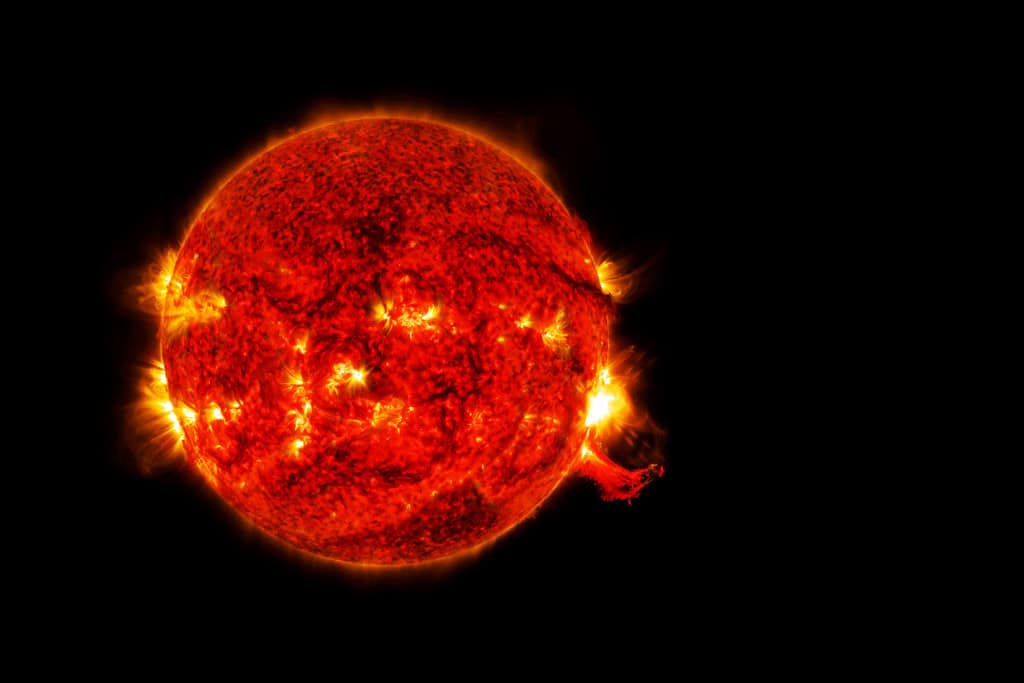
In March 2026, what was intended to be a routine day of telescopic observation culminated in an unprecedented sensory record. The amateur astronomer known as DudeLovesSpace captured an M2.7-class solar flare originating from active region AR4392. Beyond merely documenting the 16-minute eruption visually, the observer employed data sonification to translate the event into an unsettling audio recording, enabling us to "hear" the activity of our star.
Distinct from the mechanical sound familiar to us, this recording represents a conversion of radio waves, captured by terrestrial instruments, into audible signals. In the vacuum of space, sound does not propagate; however, scientists estimate that, were a conductive medium present, the Sun would emit a constant roar of approximately 100 decibels—equivalent to perpetually standing beside a jackhammer. The sonification technique circumvents this cosmic silence, offering a novel layer of interpretation for astrophysical phenomena.
For the scientific community, this approach transcends mere aesthetics; it facilitates the identification of nuances within complex data that human observation occasionally overlooks. For the public, the audio serves as a potent reminder of the colossal scale of solar energy, particularly as the star now progresses toward a less active phase of its 11-year cycle. The outcome is a glimpse into the beauty—and the violence—that defines the dynamics of the Solar System.
With information from Olhar Digital.
Source · Olhar Digital