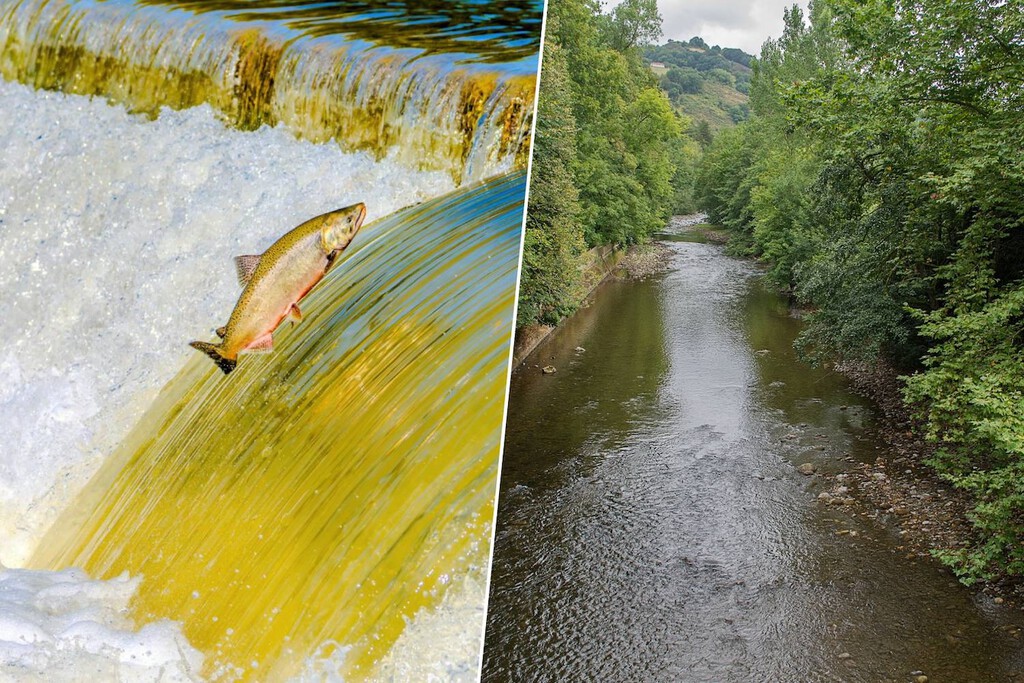
For the Atlantic salmon, the Bidasoa River, on the border between Spain and France, is not merely a spawning ground but a biological barometer of the climate crisis. Acting as Europe's "canary in the coal mine," the species now confronts an obstacle more lethal than fishing or disease: heat. Data from the public entity Orekan reveal that, in warmer years, over half of the specimens perish before completing their reproductive cycle, direct casualties of warming waters.
Radiotelemetry monitoring conducted over the past seven years reveals a fatal correlation. When river temperatures exceed 20 °C, salmon enter a state of profound physiological stress. As migrating adults do not feed, the metabolic effort required to process heat depletes energy reserves intended for their upstream journey. The outcome is a journey curtailed by thermal exhaustion.
Scientific consensus establishes stringent limits for the species' survival. Optimal growth occurs between 16 and 20 °C, ceasing entirely upon reaching 23 °C — an observation that explains the diminishing size of survivors. With the lethal limit estimated at 27.8 °C, the situation in the Bidasoa serves as a somber harbinger for European biodiversity, where the thermodynamics of a warming planet are redrawing migratory routes.
With information from Xataka.
Source · Xataka