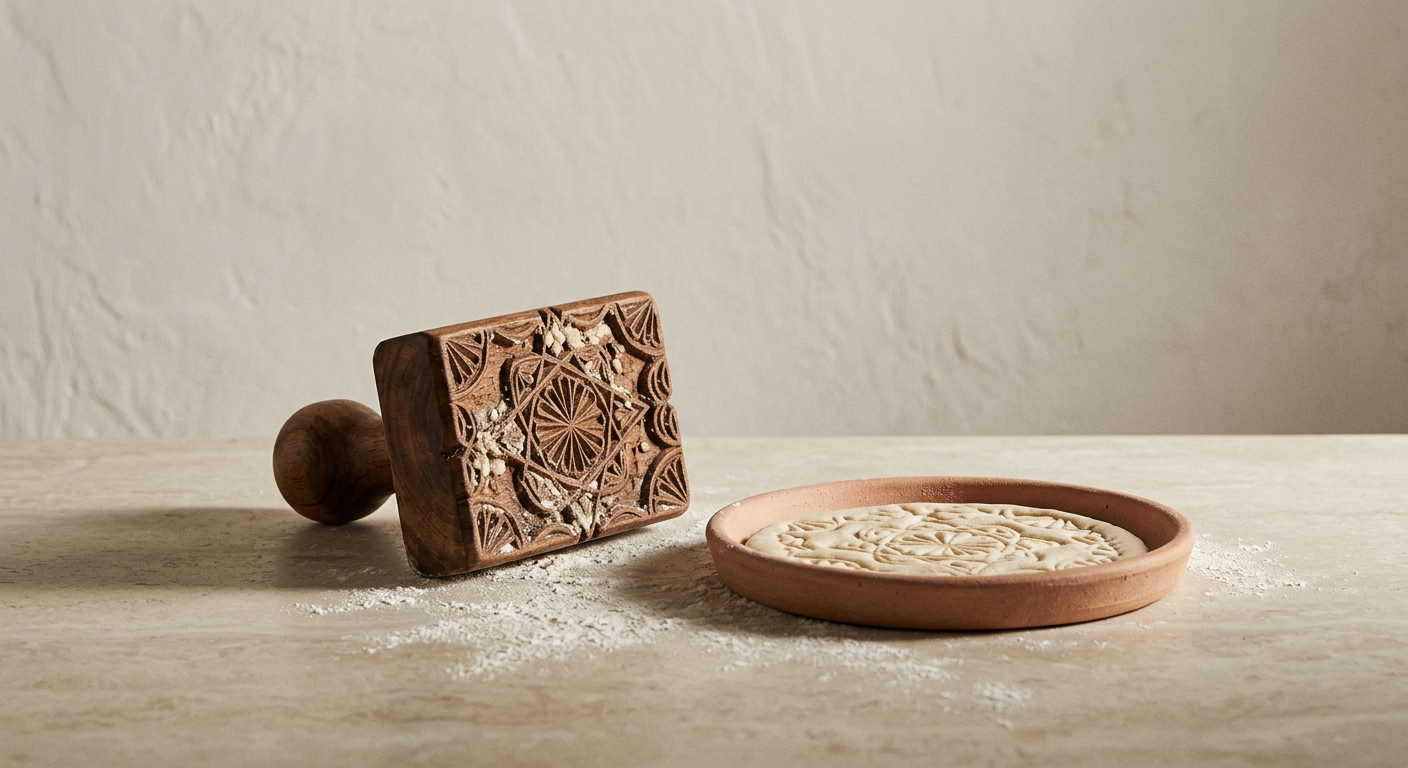
At the 2026 edition of Milan Design Week, the Uzbekistan Art and Culture Development Foundation (ACDF) unveiled a national exhibition titled "When Apricots Blossom" at the historic Palazzo Citterio in Brera. Curated by Kulapat Yantrasast of WHY Architecture, the installation served as a complex exploration of how communities in the Aral Sea region navigate environmental change through domestic tradition. Rather than presenting a static display of ethnographic artifacts, the exhibition functioned as a living laboratory, centered on the profound social and symbolic weight of traditional Uzbek breadmaking.
According to reporting on the installation, the project invited twelve international designers to collaborate with local woodcarvers, tassel-makers, and ceramicists to reimagine the chekich—the traditional stamp used to imprint intricate patterns onto non flatbread. This editorial analysis posits that the exhibition succeeds not merely as a showcase of craft, but as a structural model for how global design can engage with regional heritage without resorting to appropriation, instead fostering a lineage of shared innovation.
The Symbolic Architecture of Daily Ritual
To understand the significance of this collaboration, one must first recognize the role of the non in Uzbek society. The bread is far more than a staple; it is a sacred object, often used to seal agreements and mark life transitions. The chekich stamp serves as the primary instrument of this cultural continuity, with each imprint signaling a specific maker’s authorship and regional identity. This practice is inherently communal, grounded in generational knowledge and a strict set of customs that govern the handling and consumption of the bread.
By elevating these humble tools to the status of contemporary design objects, the exhibition forces a dialogue between the localized, ritualistic nature of craft and the hyper-mobile, globalized world of high-end design. The "When Apricots Blossom" project does not attempt to modernize the bread itself, but rather to extract the geometric and social logic embedded in the stamping process. This approach treats heritage as a living repository of data—patterns, pressures, and textures—that can be translated into new materials like polished ceramic, cast glass, and carved wood. It suggests that the value of traditional craft lies in its systemic nature, which remains adaptable even as the physical landscapes of the Aral Sea region face dramatic ecological shifts.
Mechanisms of Collaborative Translation
The mechanism behind this project relies on a deliberate, immersive exchange. By requiring international designers to travel to Karakalpakstan to work alongside local artisans, the organizers neutralized the typical "top-down" dynamic often found in international design collaborations. The designers were not merely observers; they were forced to engage with the physical limitations and material possibilities of the region, using locally sourced silk, felt, and reeds. This process ensured that the resulting objects were not purely aesthetic imitations but were grounded in the tactile reality of the craft.
Furthermore, the exhibition’s spatial design—an undulating field of reed-like elements—mirrored the fluidity of the breadmaking tradition itself. By breaking sightlines and forcing visitors to slow their pace, the installation mirrored the rhythm of the artisan at work. The inclusion of the film "Where the Water Ends" added a crucial temporal dimension, documenting the spoken memories of residents who have witnessed the disappearance of the Aral Sea. This juxtaposition of static, physical design objects and ephemeral, oral history created a multi-sensory environment where the "design" was not just the object, but the entire process of memory preservation and material adaptation.
Implications for Global Design Stakeholders
For the broader design industry, the implications of this collaboration are significant. It challenges the prevailing trend of "design tourism," where global firms pluck motifs from regional cultures without deep integration. The "When Apricots Blossom" model offers a blueprint for a more equitable exchange, where the designer’s role is to act as a facilitator of existing knowledge rather than an inventor of new forms. Regulators and cultural institutions looking to promote national heritage could view this as a sophisticated alternative to traditional museum exhibitions, as it integrates the craft into the contemporary supply chain and global market discourse.
For the designers involved, the experience highlights the necessity of "stewardship" over pure invention. As evidenced by the installation of twisted apricot branches—a byproduct of annual pruning—the project reframed the act of creation as an ongoing cycle of maintenance. This perspective encourages competitors and peers to reconsider their relationship with material sourcing and cultural context. The tension remains, however, in whether such collaborations can sustain themselves beyond the temporary spotlight of a major event like Milan Design Week, or if they risk being viewed as transient marketing exercises rather than long-term economic development for the artisan communities involved.
The Outlook for Cultural Synthesis
What remains uncertain is the durability of these new partnerships as the initial exhibition cycle concludes. While the "When Apricots Blossom" project successfully demonstrated that heritage is a fertile ground for modern design, the true test will be the evolution of these artisan-designer relationships into sustainable, independent commercial ventures. The project has raised the profile of Uzbek craftsmanship on a global stage, yet the challenge of scaling these traditional techniques for a broader, industrial market without losing their unique, ritualistic character remains a significant hurdle.
Looking ahead, observers should watch how the ACDF and other international foundations adapt this model for other regions facing environmental or social flux. The use of the yurt-inspired pavilion as a site for ongoing workshops suggests a commitment to long-term participation, but the ultimate success of such an initiative will be measured by the continued agency of the local artisans. As the intersection of traditional craft and contemporary design continues to evolve, the question of how to maintain the integrity of regional identities within a globalized aesthetic remains open.
As the exhibition concludes and the objects transition from the gallery to new contexts, the dialogue between the ancient chekich and the modern design object serves as a reminder that innovation is often a process of rediscovery. By grounding their work in the specificities of the Aral Sea region, the contributors have demonstrated that the most relevant design solutions are often those that honor the history of their own making.
With reporting from Designboom
Source · Designboom