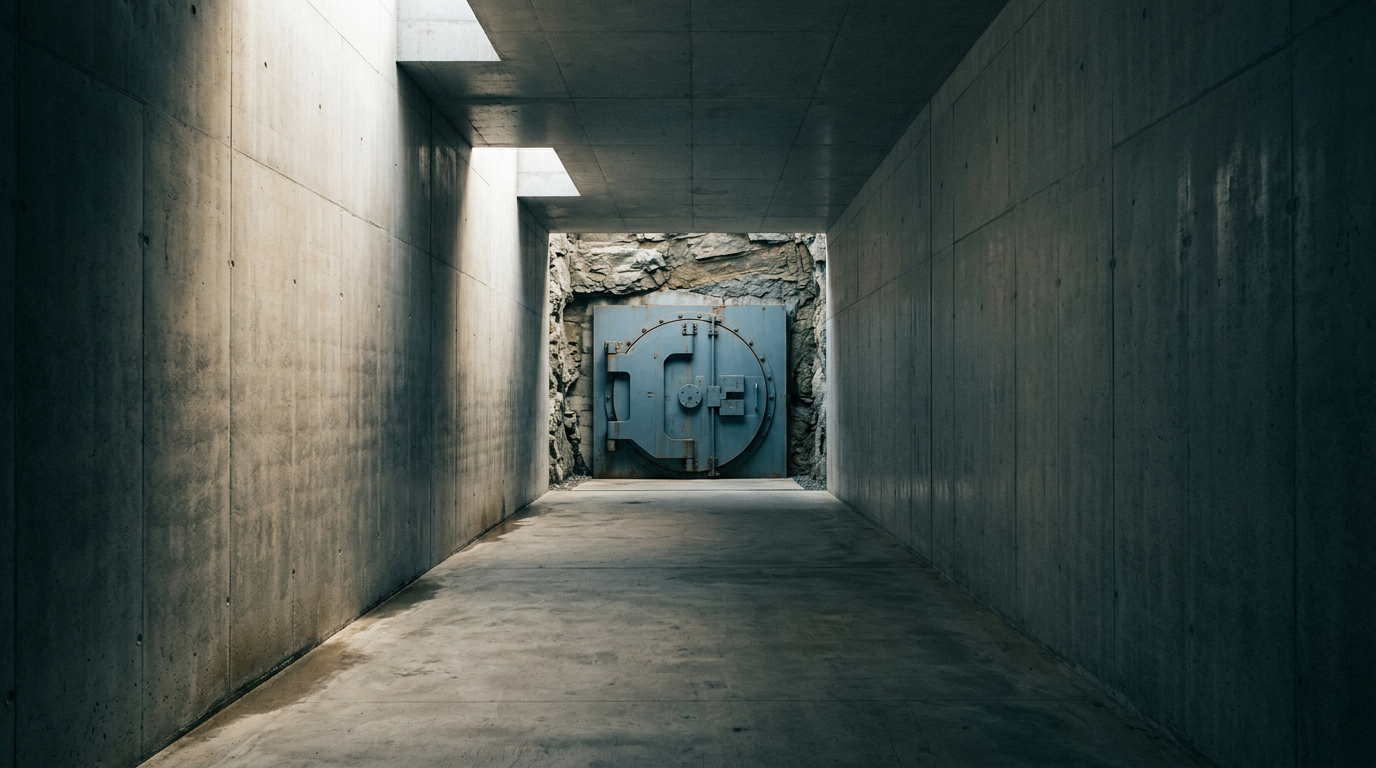
The resurgence of nuclear energy is no longer a theoretical exercise in climate policy; it is a capital-intensive reality driven by the insatiable energy demands of the modern data center economy. As technology companies scramble to secure reliable, carbon-free baseload power to sustain the growth of artificial intelligence and cloud computing, nuclear power has found itself at the center of a rare, bipartisan consensus in the United States. According to reporting from MIT Technology Review, this sudden influx of capital and renewed political interest has revitalized an industry that spent decades in stagnation. Yet, this revival brings into sharp focus a structural vulnerability that has persisted for nearly seven decades: the absence of a coherent, long-term strategy for managing high-level radioactive waste.
While the industry focuses on the efficiency of next-generation reactors and the speed of regulatory approval, the accumulation of approximately 2,000 metric tons of high-level waste annually in the US remains a mounting liability. The current reliance on onsite storage—utilizing steel and concrete casks at both active and decommissioned facilities—is widely accepted as a safe interim measure by technical experts, but it was never intended to serve as a permanent solution. As the nuclear footprint expands to accommodate the computational needs of the digital age, the lack of a centralized, geological repository transitions from a policy nuisance to a fundamental barrier to long-term sustainability. The editorial thesis here is clear: the industry’s newfound momentum must be leveraged to solve the waste problem, or the entire nuclear renaissance risks being undermined by its own unresolved externalities.
The Geopolitical Disconnect in Waste Management
The contrast between the United States and global peers highlights a profound disconnect in how nuclear infrastructure is managed. While the US possesses the world’s largest fleet of reactors, it has failed to translate this capacity into a functional waste management program. The Yucca Mountain project in Nevada, designated as the national repository in 1987, has been effectively paralyzed by decades of political friction and the cessation of federal funding in 2011. This paralysis stands in stark contrast to the progress seen in countries like Finland, where the Onkalo deep geological repository is nearing operational status after decades of methodical planning and site selection. Finland’s approach, which emphasizes long-term transparency and public engagement, provides a stark blueprint for how a nation can reconcile its energy needs with the ethical and environmental requirements of waste disposal.
Elsewhere, the French model offers a different, though equally instructive, path. By integrating the reprocessing of spent fuel into the national energy cycle—separating uranium and plutonium to create mixed oxide fuel—France has managed to reduce the volume of high-level waste that requires permanent disposal. While reprocessing is not a panacea for the total elimination of radioactive material, it represents a commitment to a closed-loop philosophy that the American industry has largely eschewed. The structural difference is that these nations have treated waste management as a core component of their national energy strategy, whereas the US has treated it as an political orphan. As the US nuclear industry enters a period of rapid growth, the failure to adopt a centralized management model—potentially through a dedicated agency similar to those in Canada or France—leaves it vulnerable to the same regulatory and social hurdles that have plagued the sector for years.
Incentives and the Role of Big Tech
The entry of technology giants into the nuclear market changes the incentive structure for the industry in ways that were previously unimaginable. These companies, driven by the need to guarantee power for massive data centers, are not merely passive consumers; they are becoming active financiers and partners in energy infrastructure. This influx of capital provides a unique opportunity to break the deadlock on waste management. If the industry is to achieve the scale necessary to support the next era of digital development, it must treat waste storage as a critical piece of infrastructure, no different from the transmission lines or the reactors themselves. The cost of failing to address this issue is not just environmental; it is a reputational and financial risk that could deter future investment if the waste accumulation becomes a lightning rod for public opposition.
Furthermore, the emergence of next-generation reactor designs—which utilize different coolants and fuel cycles—introduces new variables into the waste management equation. While these designs may offer greater efficiencies, they also generate waste streams that require specific handling protocols. The industry’s focus on the 'next-gen' label often obscures the fact that regardless of the reactor design, the fundamental requirement for geological isolation remains. By directing a fraction of the current surge in funding toward the institutional and technical frameworks for permanent storage, the industry could transform a long-standing liability into a demonstration of responsible stewardship. This would not only satisfy regulatory requirements but also provide a degree of certainty that is currently missing from the market, potentially lowering the cost of capital for future nuclear projects.
The Regulatory and Social Tensions
The implications of failing to resolve the waste issue extend far beyond the energy sector. Regulators are now tasked with overseeing an industry that is simultaneously expanding its operational footprint while lacking a final destination for its most hazardous byproducts. This creates a tension that is likely to intensify as new reactors come online. For local communities and regional authorities, the presence of onsite waste storage is a point of concern that can be leveraged by opponents of nuclear energy. Without a credible, federal path toward a deep geological repository, the industry is forced to defend the status quo, which is inherently unsustainable. The regulatory burden of overseeing thousands of individual storage sites is also far less efficient than managing a centralized, state-of-the-art facility designed for the next century of operation.
From a global perspective, the US position as a leader in nuclear technology is increasingly at odds with its status as a laggard in waste management. As China and other emerging economies accelerate their own nuclear programs, the US risks losing the ability to set the global standard for safety and waste management. If the US cannot demonstrate a viable solution for its own spent fuel, its influence over international nuclear policy will inevitably wane. The challenge is as much about governance as it is about geology. Establishing a dedicated organization to manage nuclear waste, insulated from the short-term cycles of political funding and focused on the long-term objective of site commissioning, is a necessary step if the US intends to remain a credible force in the global nuclear landscape.
Outlook for a Long-Term Problem
The path forward remains fraught with uncertainty, primarily due to the deep-seated political resistance that has stalled progress for decades. While the technical solutions for deep geological disposal are well understood, the political architecture required to implement them is currently absent. The question of whether the US can muster the political will to revisit the issue of a permanent repository remains open, and the outcome will likely depend on whether the industry can successfully frame waste management as a prerequisite for technological growth rather than a secondary concern. The next decade will be critical in determining whether the nuclear renaissance can mature into a stable, long-term energy pillar or if it will continue to operate under the shadow of its own unresolved waste.
As the industry continues to evolve, the necessity of a permanent solution becomes more pronounced. Whether the answer lies in a renewed push for established sites or a shift toward new organizational models, the status quo is unlikely to suffice for long. The challenge ahead is not merely one of engineering, but one of establishing a sustainable social contract for nuclear energy in the twenty-first century. As the industry and its stakeholders continue to negotiate the terms of this expansion, the question of how to responsibly manage the legacy of our energy consumption remains a defining challenge for the coming years.
With reporting from MIT Technology Review
Source · MIT Technology Review


