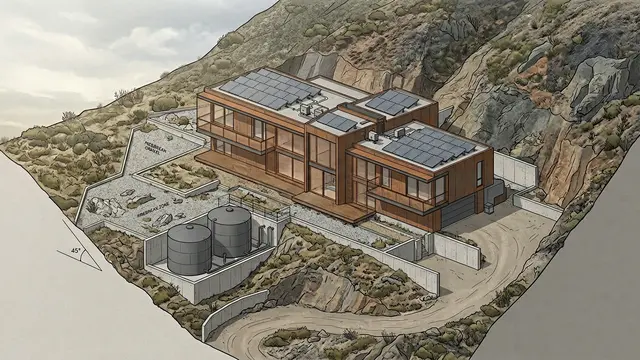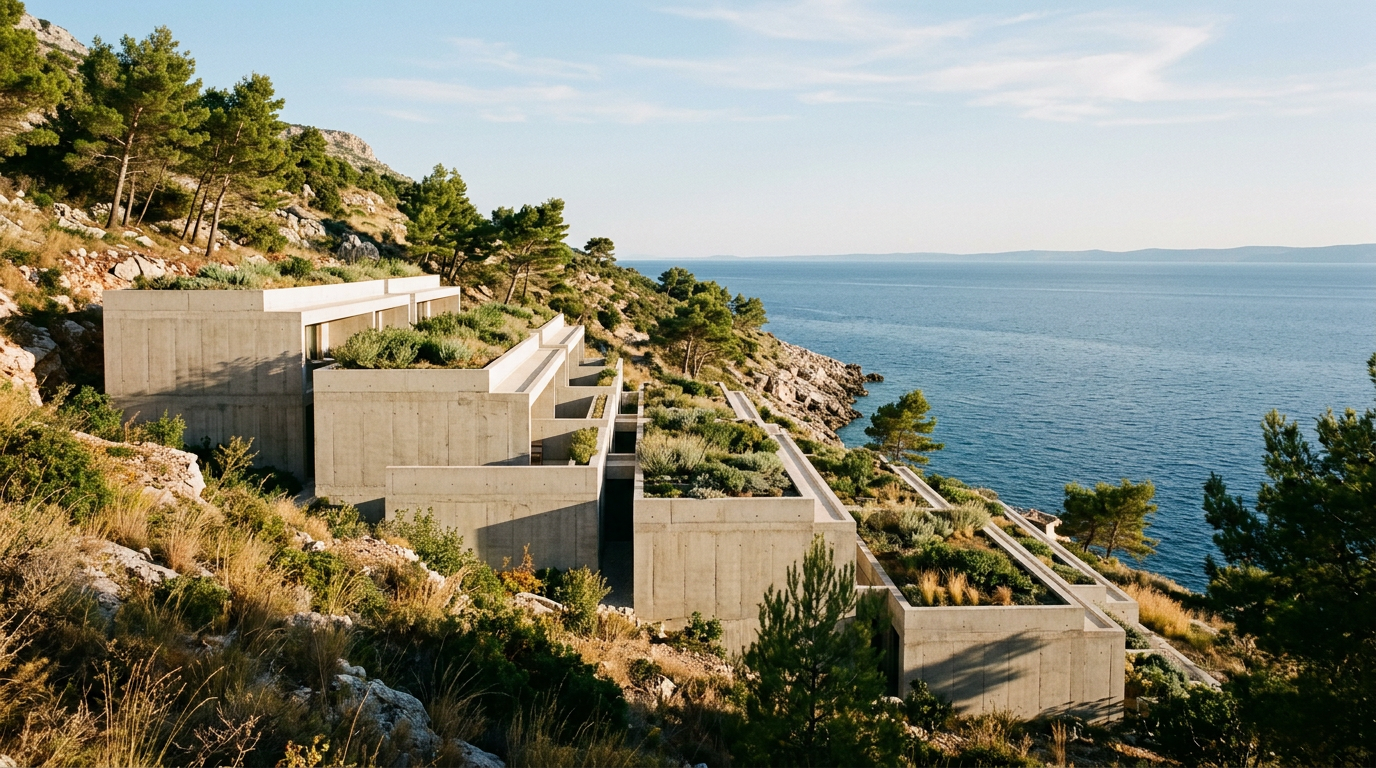
The recent unveiling of 'The Veil' by the renowned Ricardo Bofill Taller de Arquitectura in Dhërmi, Albania, marks a significant moment in the evolution of Mediterranean hospitality design. Situated along a steep, forested coastline overlooking the Adriatic Sea, the project proposes a departure from the traditional, high-impact resort model that has historically dominated the region. According to reporting from Designboom, the development is designed to minimize excavation and preserve the existing forest canopy, utilizing a series of terraced volumes that adapt to the natural topography rather than forcing the landscape to conform to a rigid, artificial grid.
At its core, the project—led by Pablo Bofill with design principals Hernán Cortés and Alborz Mohammadi—seeks to reconcile the increasing demand for luxury tourism with the urgent necessity of ecological stewardship. By organizing 366 apartments and 77 villas into a porous, green-toned fabric, the studio is attempting to redefine how high-density developments interact with fragile coastal ecosystems. This editorial analysis examines the structural and philosophical implications of this approach, positioning it as a potential blueprint for future development in emerging tourism markets across the Mediterranean basin.
The Shift Toward Site-Responsive Architecture
The history of Mediterranean coastal development is often defined by a tension between the desire for expansive views and the preservation of the natural terrain. For decades, developers favored mass-grading and concrete-heavy construction, which frequently resulted in the destruction of native vegetation and the alteration of natural drainage patterns. The approach taken by Ricardo Bofill Taller de Arquitectura with The Veil represents a conscious pivot away from this legacy. By utilizing a 'light-touch' methodology, the architects are prioritizing the preservation of the existing forest as a foundational element of the resort’s identity, rather than an afterthought to be managed or removed.
This strategy is not merely an aesthetic choice but a structural necessity in regions where the land is as much a draw for tourists as the architecture itself. The use of locally sourced stone and a color palette derived from on-site samples serves to anchor the built environment within its specific geographical context. By allowing the architecture to follow the natural contours of the slope, the project avoids the visual and physical disruption typical of large-scale interventions. This methodology suggests that the future of successful luxury development lies in the ability to create high-value experiences without compromising the intrinsic character of the site.
The Mechanism of Integration and Permeability
The technical execution of The Veil relies on a modular, terraced logic that facilitates both density and environmental permeability. By distributing the development across a network of volumes that rise vertically among existing trees, the studio creates a sense of spatial rhythm that mimics the natural forest structure. The use of glazed ceramic tiles and concrete—materials that reflect light and shadow—further aids in breaking down the perceived mass of the buildings. This is a deliberate mechanism intended to ensure that the development does not read as a monolithic structure, but rather as a layered, lightweight intervention that 'touches the ground lightly.'
Furthermore, the integration of communal spaces, such as the central social club and restaurant, demonstrates a sophisticated approach to circulation. By curving these structures around ancient trees, the architects move beyond the rectilinear constraints often found in commercial architecture. This design flexibility creates a dialogue between the built environment and the organic landscape, ensuring that the experience of the user is constantly mediated by the surrounding nature. The result is a porous, open character that allows for maximum cross-ventilation and natural light, reducing the reliance on energy-intensive climate control systems and further aligning the project with contemporary sustainability goals.
Stakeholder Dynamics and Regulatory Tensions
The implications of this project extend far beyond the immediate site in Dhërmi, touching upon the broader regulatory and economic landscape of Albania’s emerging tourism sector. As the country seeks to position itself as a premier destination, it faces the critical challenge of balancing rapid economic growth with the preservation of its natural assets. Regulators and developers are increasingly pressured by both international investors and local environmental advocates to adopt standards that prevent the degradation of coastal beauty. The Veil serves as a high-profile case study for how private developers can align their commercial incentives with the preservationist requirements set by increasingly stringent local planning authorities.
For competitors, the project sets a new benchmark for what is expected in terms of site sensitivity. It forces a conversation about the long-term viability of traditional, invasive development models. Consumers, meanwhile, are showing an increasing preference for 'eco-conscious' luxury, where the value proposition is tied to the quality of the surrounding environment rather than just the exclusivity of the amenities. This shift in market demand creates a powerful incentive for architects and developers to prioritize design excellence that respects, rather than exploits, the natural world, potentially leading to a more sustainable trajectory for regional tourism development.
Open Questions for the Future of Coastal Tourism
While the architectural vision for The Veil is compelling, several questions remain regarding the long-term maintenance of such a complex, integrated system. The success of a 'light-touch' development depends heavily on the ongoing management of the landscape and the ability to maintain the delicate balance between human activity and the preserved forest canopy. As the resort matures, the interaction between the built structures and the evolving vegetation will be a critical metric of its success. Observers will be watching to see how the project handles the pressures of seasonal occupancy and the environmental impact of increased human traffic in what was previously a relatively undisturbed coastal forest.
Furthermore, the scalability of this model remains an open question. Can the principles of terraced, site-responsive architecture be successfully applied to larger or more sensitive sites without compromising the very qualities that make them successful? As the industry continues to grapple with the dual pressures of climate change and the need for economic development, the lessons learned from this project will likely inform the next generation of coastal design. The transition toward a more nuanced, site-specific approach is well underway, but the path forward requires a continued commitment to both architectural rigor and ecological humility.
As the project progresses through its construction phase, the broader industry will be monitoring its performance as both a destination and a development model. Whether this approach becomes the standard for future coastal interventions or remains a singular, high-end exception will depend on the continued alignment of commercial, regulatory, and environmental interests in the region.
With reporting from Designboom
Source · Designboom