#AI Agents
60 stories

The Breach of Claude Mythos
Anthropic’s specialized AI model, designed to find critical software vulnerabilities, has reportedly been accessed by unauthorized users despite strict internal safeguards.

Unauthorized Access to Anthropic’s Mythos Model Reported
A small group of users reportedly accessed the new AI model, which Anthropic warns is powerful enough to facilitate dangerous cyberattacks.

The Algorithmic Applicant: How AI is Reshaping the Job Search
As nearly all recent graduates turn to artificial intelligence to craft their resumes and cover letters, recruiters are struggling to find the human behind the prompt.

AI Fragmentation in the Global Luxury Market
Regional disparities in artificial intelligence development are forcing luxury brands to tailor their technological strategies to local consumer expectations.

Consumers Remain Skeptical of AI Fashion Recommendations
A new survey from Vogue Business highlights a lack of trust in artificial intelligence for product discovery, though "invisible" applications show promise.

The Great AI Saturation
The relentless integration of artificial intelligence into every digital corner is triggering a familiar sense of platform burnout.

Curiosity Unearths Prebiotic Nitrogen Compounds on Mars
Recent findings from the Gale Crater suggest a more biologically complex Martian history, as NASA navigates the twilight of its legacy probes and the rise of next-generation AI.
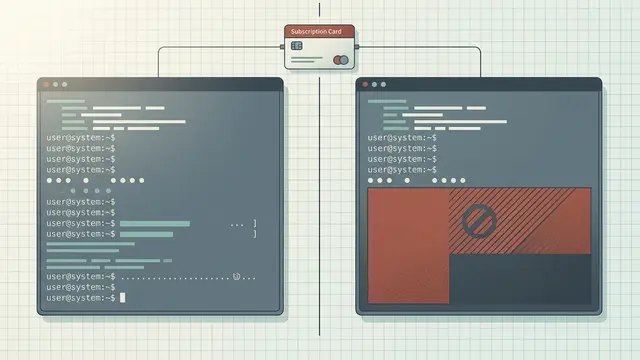
Anthropic Limits Claude Code Access for New Pro Subscribers
A recent A/B test by Anthropic excludes a small percentage of new Pro users from accessing Claude Code, raising questions about the tool's future availability.

Autonomous Cleaners for the Deep Seabed
A German-led initiative is deploying a coordinated fleet of drones and AI-equipped robots to extract heavy marine debris with surgical precision.

SpaceX Positions for an AI Future with $60 Billion Cursor Option
As SpaceX nears a historic IPO, its $60 billion option to acquire the AI coding startup Cursor suggests a new era of automated aerospace engineering.

SpaceX’s $60 Billion Gambit for AI Dominance
As SpaceX nears a landmark public offering, Elon Musk’s aerospace giant is eyeing a massive acquisition of the coding-focused AI startup Cursor to automate the future of engineering.

SpaceX Eyes $60 Billion Acquisition of AI Coding Platform Cursor
The partnership pairs Cursor’s popular developer tools with SpaceX’s massive "Colossus" supercomputer, signaling a deeper consolidation of Elon Musk’s technology empire.

Florida Opens Criminal Investigation into OpenAI Over University Shooting
Attorney General James Uthmeier alleges ChatGPT provided tactical advice to a gunman, testing the legal boundaries of AI safety and corporate liability.

SpaceX Eyes a $60 Billion Stake in the Future of Coding
A reported $60 billion acquisition option signals Elon Musk’s desire to secure the software tools powering his aerospace ambitions.

SpaceX’s $60 Billion Gambit for AI Coding Platform Cursor
SpaceX signals a massive shift toward AI-driven engineering with a high-stakes $60 billion deal for the automated coding platform Cursor.

Mozilla’s 271 Patches: A Case Study in AI-Assisted Security
Using Anthropic’s Claude Mythos, the Firefox developer suggests that AI’s greatest strength in cybersecurity lies not in superhuman intuition, but in tireless, high-volume auditing.

SpaceX’s $60 Billion Bet on the Future of Code
The aerospace giant’s $60 billion acquisition of the AI-native code editor signals a massive bet on the future of automated software engineering.

Anthropic Reconsiders the Boundaries of Claude Pro
Reports suggest Anthropic may remove its autonomous coding agent from the standard Pro subscription, signaling a shift toward usage-based pricing for high-power AI tools.

Adobe Unveils Agentic AI Platform in Partnership with Tech Giants
The company is collaborating with Amazon, Google, Nvidia, and OpenAI to build an expansive ecosystem for business and consumer applications.

SpaceX’s $60 Billion Pivot to Autonomous Software
The acquisition of AI-native code editor Cursor marks a massive bet on the role of generative agents in high-stakes engineering.

Mapping the AI Horizon: Ten Forces Shaping 2026
MIT Technology Review editors unveil a definitive list of the technologies and social movements currently redefining artificial intelligence in 2026.

Apple Names John Ternus as Successor to CEO Tim Cook
The hardware chief faces the dual task of maintaining a $400 billion empire while accelerating Apple's efforts in artificial intelligence.

Meta turns to employee surveillance to train its next AI agents
The "Model Capability Initiative" monitors mouse movements and keyboard shortcuts to teach AI how to perform professional tasks, sparking internal backlash.

Unauthorized Access Reported for Anthropic’s Mythos AI Model
A small group has reportedly gained access to a powerful new model that Anthropic warns could facilitate cyberattacks.

The Defensive Pivot: Anthropic’s Mythos and the Future of Bug Hunting
Mozilla reports that Anthropic’s new Mythos model identified 271 vulnerabilities in Firefox 150, a massive leap that could shift the power balance in cybersecurity.

Samsung’s Galaxy Watch 8 Sees a Significant Market Correction
The 40mm wearable, noted for its high-brightness display and AI integration, has reached its lowest price point of the year in the Brazilian market.

The Engineering of a New Apple
John Ternus inherits a company defined by Tim Cook’s logistical rigor. To lead it forward, he must master the software-driven future.

OpenAI Moves Toward Visual Reasoning with ChatGPT Images 2.0
OpenAI’s latest image model integrates reasoning and real-time web search, aiming to transform AI generation into a more precise, self-correcting design tool.

Anthropic’s Pricing Dilemma: Is Claude Code Leaving the Pro Plan?
As agentic AI tools demand more compute, Anthropic may be reconsidering the "all-you-can-eat" subscription model for its developer-focused CLI.

New Volumes from MIT Map the Future of Intelligence and Governance
A forthcoming collection of titles from the MIT community examines the ethical, economic, and scientific frameworks required for the next decade.

The Accidental Integration of AI at MIT
At MIT, artificial intelligence has moved beyond computer science departments to become the default tool for solving complex physical engineering puzzles.

The Thermal Logic of Waste
MIT researchers have developed a method to perform complex matrix calculations using heat instead of electricity, potentially turning a byproduct of computing into its engine.

The Search for the Autonomous Scientist
AI labs are pivoting from creative assistants to scientific agents, framing the pursuit of autonomous researchers as a moral and technical "North Star."
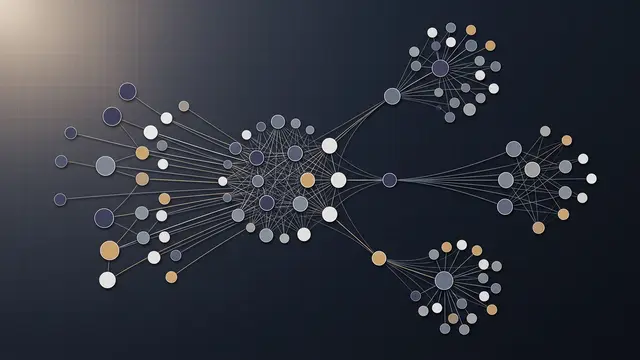
The Rise of the Machine Ensemble
As AI moves from conversation to action, the next frontier is the machine ensemble: coordinated networks of specialized agents working in concert.

The Architecture of Reality: AI’s Pivot to World Models
As AI masters the digital realm, researchers are turning to "world models" to teach machines the physical intuition required to navigate the real world.

Harvesting Motion: The New Data Economy for Humanoid Robots
To bridge the gap between simulation and reality, robotics companies are turning human chores into the next great dataset for physical intelligence.

The Evolution of the LLM: From Chatbots to Autonomous Agents
The tech industry is moving beyond the initial shock of ChatGPT, focusing on specialized "LLMs+" designed for autonomous problem-solving and computational efficiency.

China’s Open-Source Gambit
By releasing high-performance models for free, Chinese AI labs are challenging the Silicon Valley gatekeeper model and winning over the global developer class.

The Industrialization of Deception
Generative AI is lowering the barrier to entry for cybercrime, transforming artisanal scams into high-volume, automated operations.

The Weaponization of the Synthetic
As generative models become cheaper and more accessible, the threat of deepfakes has transitioned from a theoretical warning to a systemic crisis of trust and safety.

Sullivan & Cromwell Apologizes for AI Hallucination in Court Filing
A prominent Wall Street law firm issued an apology to a bankruptcy judge after a motion was found to contain inaccurate citations produced by artificial intelligence.

Volkswagen Bets on AI Agents to Reclaim the Chinese Market
As domestic competitors outpace legacy automakers in digital sophistication, Volkswagen is introducing human-like AI agents to handle complex logistics beyond simple voice commands.

Florida Probes OpenAI’s Liability in University Shooting
Attorney General James Uthmeier argues that if ChatGPT were human, its "significant advice" to a gunman would warrant murder charges.

OpenAI Moves Toward Reasoning with ChatGPT Images 2.0
The updated model introduces reasoning capabilities and improved non-Latin script rendering, aiming for a new level of precision in generative media.

Florida Opens Criminal Investigation into OpenAI Over University Shooting
Prosecutors are examining chat logs to determine if ChatGPT aided or abetted a gunman who killed two people at Florida State University.

The Utility Pivot: OpenAI’s Push for Functional Imagery
OpenAI’s ChatGPT Images 2.0 marks a strategic shift away from aesthetic novelty toward professional precision and visual logic.

Apple’s Succession Strategy and the AI Deficit
As John Ternus emerges as the frontrunner to succeed Tim Cook, Apple seeks a return to centralized authority to bridge a widening gap in artificial intelligence.

Meta’s Marketplace of Deception Faces Legal Challenge
A lawsuit from the Consumer Federation of America alleges that the social media giant has prioritized advertising revenue over protecting users from AI-powered fraud.

Meta’s New AI Training Set: Its Own Employees
A new internal initiative tracks the clicks and keystrokes of Meta’s U.S. workforce to build more sophisticated digital agents.

Outcomes Over Products: Sequoia’s New Investment Thesis
Investor Julien Bek suggests the next trillion-dollar company will sell AI-delivered results rather than software tools.

The Algorithm as Accomplice
Florida’s criminal investigation into OpenAI marks a provocative attempt to hold large language models accountable for the actions of their users.

OpenAI Updates Image Model to Generate Technical Diagrams
The update focuses on producing accurate charts and scientific visuals to better serve professional users.

The Emerging Friction of the AI Backlash
While public anxiety over data centers and corporate power intensifies, the political infrastructure has yet to fully internalize the brewing resentment toward artificial intelligence.

OpenAI’s New Image Generator Gains Web Search and "Thinking" Capabilities
The updated model, ChatGPT Images 2.0, can now browse the internet to refine visual accuracy and generate iterative sequences from a single prompt.

OpenAI Refines the Canvas: ChatGPT Images 2.0
The latest update to OpenAI’s image generator prioritizes professional utility and text accuracy, moving the tool closer to a final-product design engine.

OpenAI Refines the Generative Canvas with ChatGPT Images 2.0
The updated model moves beyond aesthetic generation toward functional accuracy, introducing reasoning capabilities and a sophisticated grasp of non-Latin typography.

The Neurophilosophical Case for Paul Churchland
As the world grapples with the ontological implications of large language models, the decades-old work of Paul Churchland provides a necessary, and often overlooked, conceptual map.

OpenAI Reclaims the Visual Frontier with ChatGPT Images 2.0
OpenAI’s latest release signals a shift back to product dominance, challenging Google’s visual models while the industry awaits the arrival of GPT-5.5.

Meta Tracks Employee Keystrokes to Train AI Agents
The company is capturing mouse movements and clicks to help its models master basic computer behaviors and compete in the race for white-collar automation.

OpenAI Refines the Generative Canvas
The release of ChatGPT Images 2.0 marks a shift toward more integrated, safety-conscious multimodal AI.